The Boom Always Believed in Itself: What America's Ghost Towns Knew That We Don't
The Boom Always Believed in Itself: What America's Ghost Towns Knew That We Don't
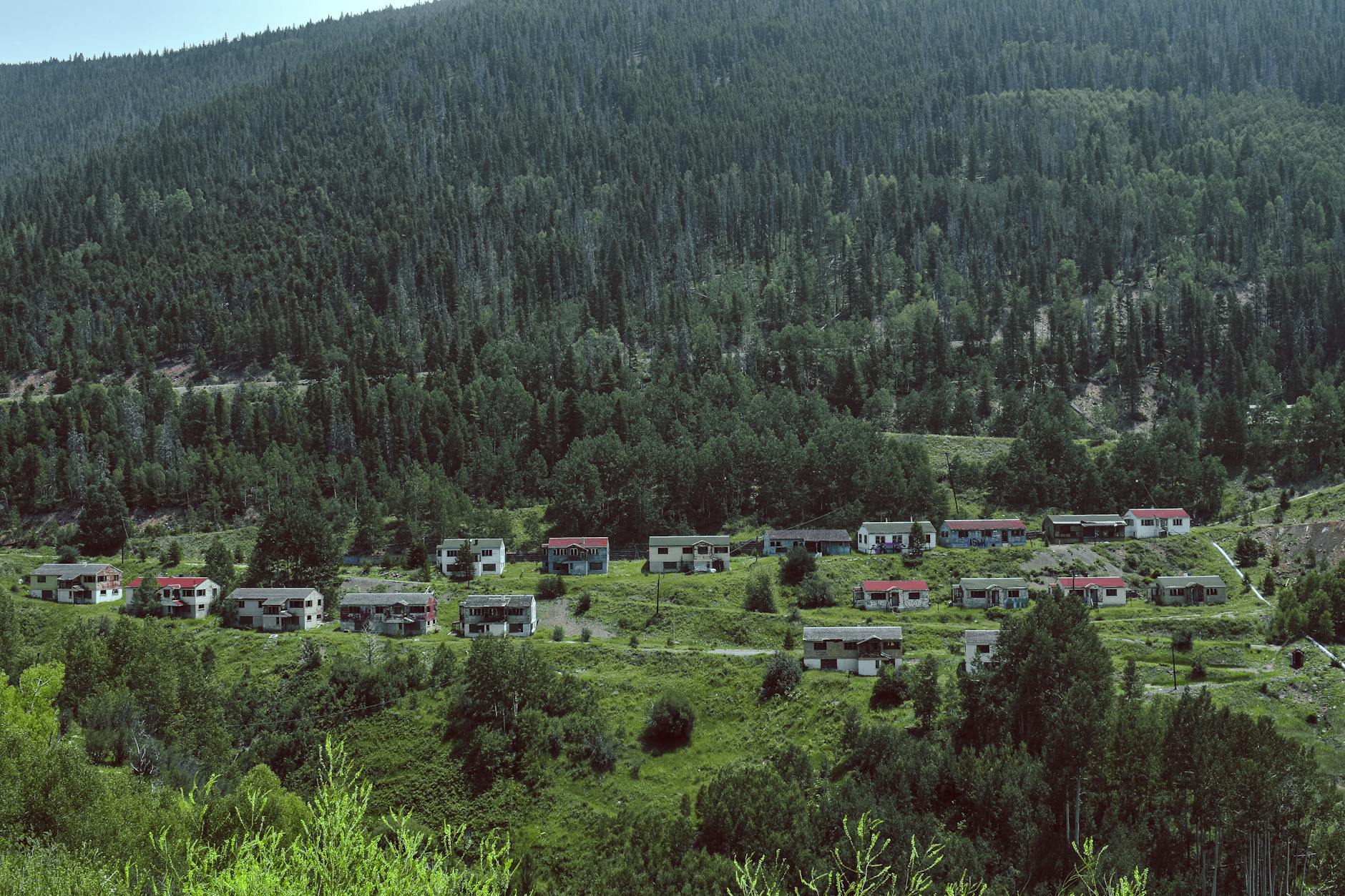
There is a particular kind of silence that settles over a place that used to be loud. Walk the main street of Bodie, California — once a roaring silver camp of ten thousand souls, now a state historic park where the wind moves through broken window frames — and you are not walking through failure. You are walking through confidence. The storefronts were built to last. The newspaper office had a printing press. The church had a bell. Nobody in 1880 was hedging their bets on Bodie. They were certain.
That certainty is the first thing worth studying, because it has never once been unique to any particular era. It is not a product of frontier naivety or Gilded Age excess or postwar industrial swagger. It is a feature of human psychology so consistent across centuries that historians can practically set their watches by it.
The Script Has Not Changed
The sequence tends to go like this. A resource is discovered, or a railroad is routed, or a factory opens, or a platform launches. People arrive faster than infrastructure can support them. Land prices climb. Newspapers — and in later decades, venture press releases — describe the place as the inevitable center of the next American century. Speculators buy. Families move. Schools are named after optimistic abstractions: Progress, Liberty, Industry.
Then the seam runs out, or the railroad reroutes, or the factory automates, or the platform pivots. What follows is not immediate collapse but something more psychologically revealing: denial. The boosters keep boosting. The chamber of commerce issues statements. Local editorials insist that the fundamentals are sound. People who have tied their identities to the place's ascent find it almost neurologically impossible to process its decline. This is not stupidity. It is the same loss-aversion bias that Daniel Kahneman spent decades documenting in university labs — except here, the experiment ran for generations and the subjects lost their houses.
Gary, Indiana, is perhaps the most instructive case. Founded in 1906 by U.S. Steel, it was a planned city — designed to be great. At its peak it housed nearly 180,000 people and produced steel that built American skyscrapers. Civic leaders in the 1950s genuinely compared its trajectory to Chicago's. Today, Gary's population has fallen below 70,000, and its ornate City Methodist Church stands roofless against the sky like a question nobody wants to answer. The collapse was not sudden. It took decades. And for most of those decades, the dominant local narrative was that recovery was imminent.
Why We Keep Building on Sand
The old routes of human behavior are well-worn precisely because they feel like solid ground when you're standing on them. Boosterism — the civic religion of American expansion — is not irrational in the moment of its practice. When a town is growing, promoting growth works. The error is not in the promotion. The error is in mistaking a temporary condition for a permanent identity.
Centralia, Pennsylvania, offers a grimmer variation. A coal-mine fire ignited beneath the town in 1962 and has been burning ever since, slowly rendering the ground uninhabitable. The state bought out most residents over subsequent decades. But a small number refused to leave — not because they lacked information, but because identity and place had fused in a way that made departure feel like self-erasure. The psychological literature on sunk-cost reasoning could not have designed a cleaner demonstration.
What these places share is not geography or industry or era. They share a moment when the collective story a community told about itself became more powerful than the evidence accumulating around it. That moment is not a historical curiosity. It is a recurring human event.
The Boomtowns That Are Certain Right Now
Consider, without prejudice, the cities and corridors currently being described in the language that Bodie's newspapers once used. The Texas Triangle. The Research Triangle. The semiconductor corridors of Arizona. The remote-work-driven population surges in Boise, Austin, and Nashville. Each of these places has genuine momentum. None of that changes what the historical record uniformly suggests: that momentum is a condition, not a destiny.
The specific resource changes. The railroad becomes the interstate becomes the fiber-optic line becomes the AI data center. The psychology does not change. The booster always believes the boom is structural. The speculator always believes they arrived early enough. The family always believes the school district will keep improving. These beliefs are not unreasonable. They simply have a documented tendency to outlast the conditions that made them reasonable.
This is not an argument for paralysis or pessimism. People have to live somewhere, and most boomtowns produce genuine prosperity for at least one generation. The argument is narrower: that the confidence of a boom is itself a signal worth reading carefully, because it has historically coincided with the suppression of inconvenient questions.
What the Old Routes Actually Teach
The value of walking through Bodie, or driving the emptied boulevards of Gary, or reading about Centralia, is not melancholy tourism. It is the acquisition of a longer perspective than any single economic cycle can provide. Human beings are not good, as a general matter, at imagining the death of the thing they are currently inside. The historical record is the only corrective we have — a vast, impersonal archive of every time someone was absolutely certain and turned out to be absolutely wrong.
The towns that have survived and adapted across centuries tend to share something that the ghost towns lacked: a relationship to place that was not entirely contingent on a single resource, a single employer, or a single story. They built institutions that outlasted industries. They allowed the narrative to evolve rather than defending it past the point of evidence.
Bodie's silence is not a warning about silver or California or the nineteenth century. It is a warning about the particular human habit of building a worldview around a boom and calling that worldview reality. The bell is still in the church tower. The printing press is still in the newspaper office. They were not wrong to build those things. They were wrong to stop asking whether the ground beneath them was still solid.
Somewhere right now, a city council is passing a resolution declaring itself the future. The resolution is probably correct, for a while. The question worth asking — the one the historical record keeps posing, without sentiment and without mercy — is what happens when it isn't.