Same Street, Different Story: How American Towns Have Always Survived by Starting Over
Same Street, Different Story: How American Towns Have Always Survived by Starting Over
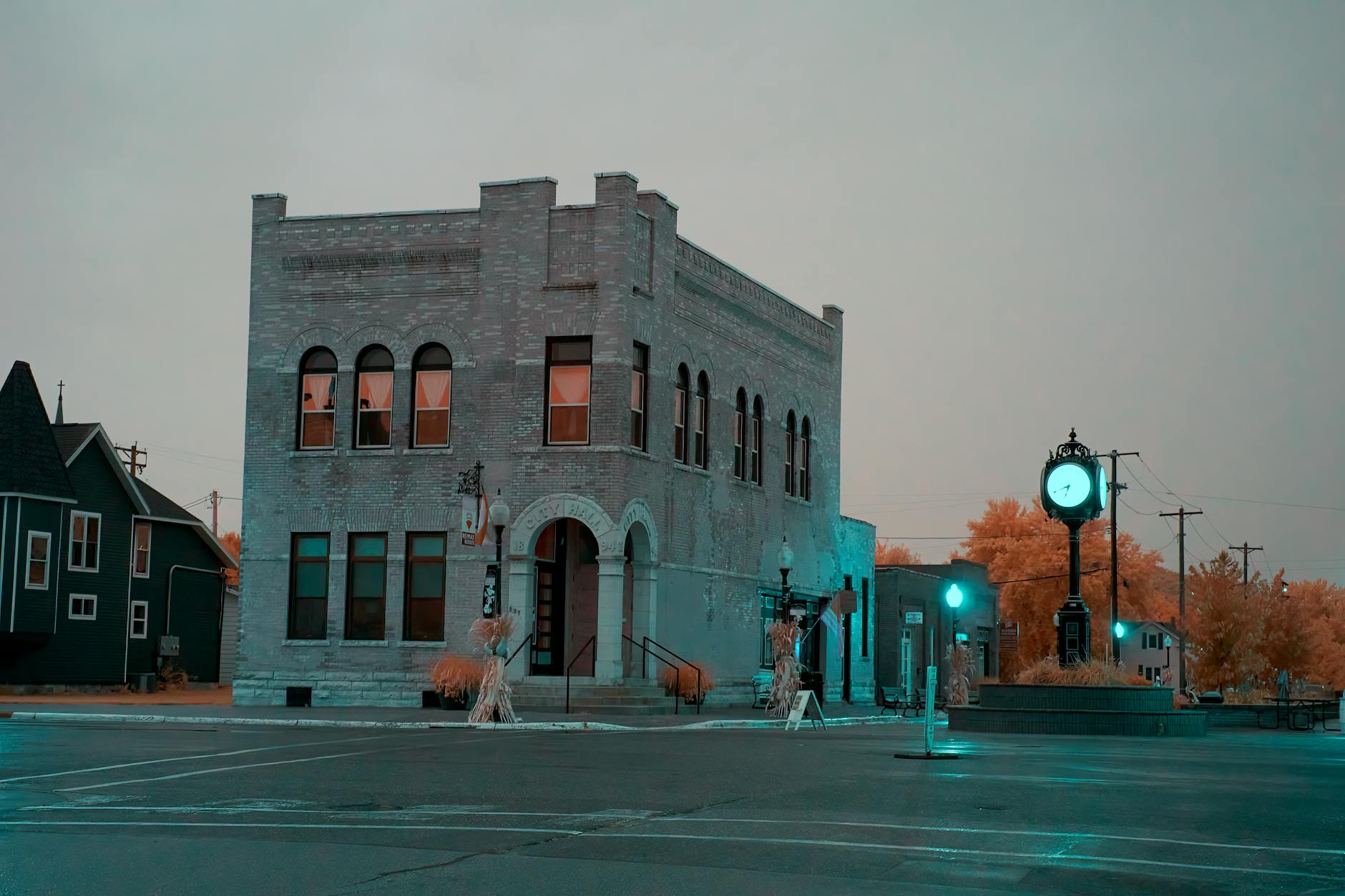
The building at 14 Main Street in North Adams, Massachusetts has housed, across its history, a textile machinery manufacturer, a photography studio, a diner, a vacant storefront, a gallery annex, and — most recently — a boutique selling locally roasted coffee and hand-thrown ceramics. The building itself has not changed much. The town around it has changed almost completely, several times, and is in the middle of changing again.
North Adams is not exceptional. It is, in this respect, representative of a pattern that runs through dozens of American communities: the mill town that became a resort, the resort that became an arts colony, the arts colony that became a remote-work destination. Each reinvention looks, in retrospect, like a story about vision and planning. Examined more closely, it looks like something older and considerably less tidy — ordinary people making the same stubborn bet on a place, over and over, until the place finds a new reason to justify their faith.
The old routes of American community life have always run through Main Street. They just don't always run in the same direction.
North Adams, Massachusetts: The Long Pivot
North Adams reached its economic apex in the late nineteenth century as a center of textile and electrical manufacturing. Arnold Print Works employed thousands. Sprague Electric, which arrived in the mid-twentieth century, employed thousands more. At its peak, the city — it is technically a city, though it has rarely felt like one — was a dense, working industrial community tucked into the Berkshire hills in the far northwest corner of Massachusetts.
Sprague Electric closed its North Adams operations in 1985. The main plant, a sprawling complex of interconnected brick buildings covering more than a quarter-million square feet, sat largely empty for a decade. The city's population, which had been declining since the 1960s, continued to fall. Downtown storefronts went dark.
What happened next is frequently told as a story about the Massachusetts Museum of Contemporary Art — MASS MoCA — which opened in the Sprague complex in 1999 and became, improbably, one of the largest contemporary art museums in the United States. The museum did transform North Adams in measurable ways. Hotel tax revenue increased. Restaurants opened. The census data from 2000 onward shows real, if modest, stabilization.
But the MASS MoCA story, as it is usually told, overstates the role of institutional vision and understates the role of the people who simply did not leave. Throughout the 1980s and 1990s, while the Sprague plant sat empty and the city's fiscal situation deteriorated, a population of artists, craftspeople, and longtime residents continued to occupy the town — opening studios in cheap commercial spaces, maintaining the social fabric of a community that had not yet decided it was finished. The museum arrived into an environment that those people had kept habitable. The vision mattered. The stubbornness mattered more.
North Adams is now, in the early 2020s, in the early stages of what may be its fourth economic identity — a destination for remote workers priced out of Boston and New York, drawn by housing costs that remain, by regional standards, remarkably low. Whether this iteration holds is genuinely uncertain. What is not uncertain is that the town has navigated this kind of uncertainty before.
Marfa, Texas: The Accidental Blueprint
Marfa, Texas had approximately 2,500 residents in 1970 and approximately 1,800 in 2020. By any conventional demographic metric, it is a town in long-term decline. By almost every other metric — cultural visibility, real estate valuation, the density of written profiles in national publications — it has been one of the more successful community reinventions in recent American history.
The origin point is usually identified as Donald Judd, the minimalist sculptor who began acquiring property in Marfa in the early 1970s and eventually established the Chinati Foundation, a permanent installation of large-scale works in converted military buildings on the edge of town. Judd wanted space, light, and distance from the New York art world. Marfa had all three in abundance, along with cheap real estate and a high desert landscape of considerable austerity and beauty.
What Judd did not intend — and what the standard Marfa narrative tends to underemphasize — is that the town he found was not empty. It was a working ranching and border community with its own history, its own social structures, and its own ongoing economic struggles predating his arrival by a century. The reinvention of Marfa as an art destination was layered on top of a community that had already survived the decline of the cattle economy, the contraction of the railroad, and the closure of the local Army base. Each of those losses had required adaptation. Judd's arrival was, from the perspective of longtime residents, simply the latest in a series of external forces requiring a response.
The response was, characteristically, mixed. Some longtime residents sold property at prices that transformed their financial situations. Others found themselves priced out of a town their families had occupied for generations as real estate values rose to accommodate art-world visitors. The reinvention that looks, from the outside, like a clean success story is, from the inside, considerably more complicated — a negotiation between the town's new economic identity and the community that preceded it.
This negotiation is not unique to Marfa. It is, in fact, the central dynamic of almost every successful small-town reinvention: the new identity generates resources, and the community argues, sometimes bitterly, about who those resources belong to and what they are for.
What Reinvention Actually Looks Like From the Inside
The popular narrative of small-town reinvention tends to favor a particular story structure: decline, visionary intervention, revival. It is a satisfying arc, and it is not entirely false. Institutions matter. Individual decisions — a museum board's vote, a single artist's choice of location, a local government's decision to rezone a derelict industrial site — can create conditions that would not otherwise exist.
But the census data and local historical records of towns like North Adams and Marfa tell a more granular story. The communities that successfully reinvent themselves are almost never communities that had emptied out and then refilled. They are communities that retained, through the difficult years, a sufficient density of people committed to the place to maintain its basic social infrastructure — the volunteer fire departments, the local newspapers, the informal networks of mutual support that make a collection of buildings into something that can plausibly be called a town.
This retention is not passive. It is a continuous active choice, made by individuals who had, in most cases, the option to leave and decided not to exercise it. The schoolteacher who stayed when the mill closed. The hardware store owner who kept the doors open through a decade of declining foot traffic. The young person who came back after college because the place meant something to them that they couldn't fully articulate.
These people are not, in the conventional sense, visionaries. They are not executing a strategy. They are doing something considerably older and more recognizable: they are refusing to abandon a place they love, and finding, incrementally, new ways to make that stubbornness economically viable.
The Bet on Place
There is a version of the small-town reinvention story that frames it as a triumph of creative placemaking, economic development strategy, or cultural entrepreneurship. All of these framings contain truth. None of them quite captures the thing that actually holds a community together across multiple cycles of economic identity.
The thing that holds it together is simpler and older than any of those concepts. It is the decision, made by enough people in enough consecutive generations, that this specific place — this particular arrangement of streets, buildings, landscape, and neighbors — is worth the trouble of staying.
This decision has been made, and remade, in hundreds of American towns across two centuries of economic disruption. The mill gave way to the resort. The resort gave way to the arts colony. The arts colony is, in several cases, currently giving way to the remote-work destination, which will itself eventually give way to something that does not yet have a name.
The building at 14 Main Street in North Adams will probably still be standing when that happens. Someone will find a use for it. They usually do.