Diocletian's Playbook: How a Third-Century Emperor Tried to Fix Inflation and Made It Worse
Diocletian's Playbook: How a Third-Century Emperor Tried to Fix Inflation and Made It Worse
In the autumn of 301 AD, the Roman Empire was hemorrhaging. Not from a barbarian invasion or a lost battle, but from something quieter and more corrosive: the purchasing power of its own money was collapsing in real time. Soldiers were paid in coin. That coin, once reliably silver, had been progressively adulterated over decades until it was mostly bronze with a thin silver wash. Prices were climbing. Ordinary Romans were furious. And the emperor, Diocletian — a man not known for tolerating disorder — decided to act.
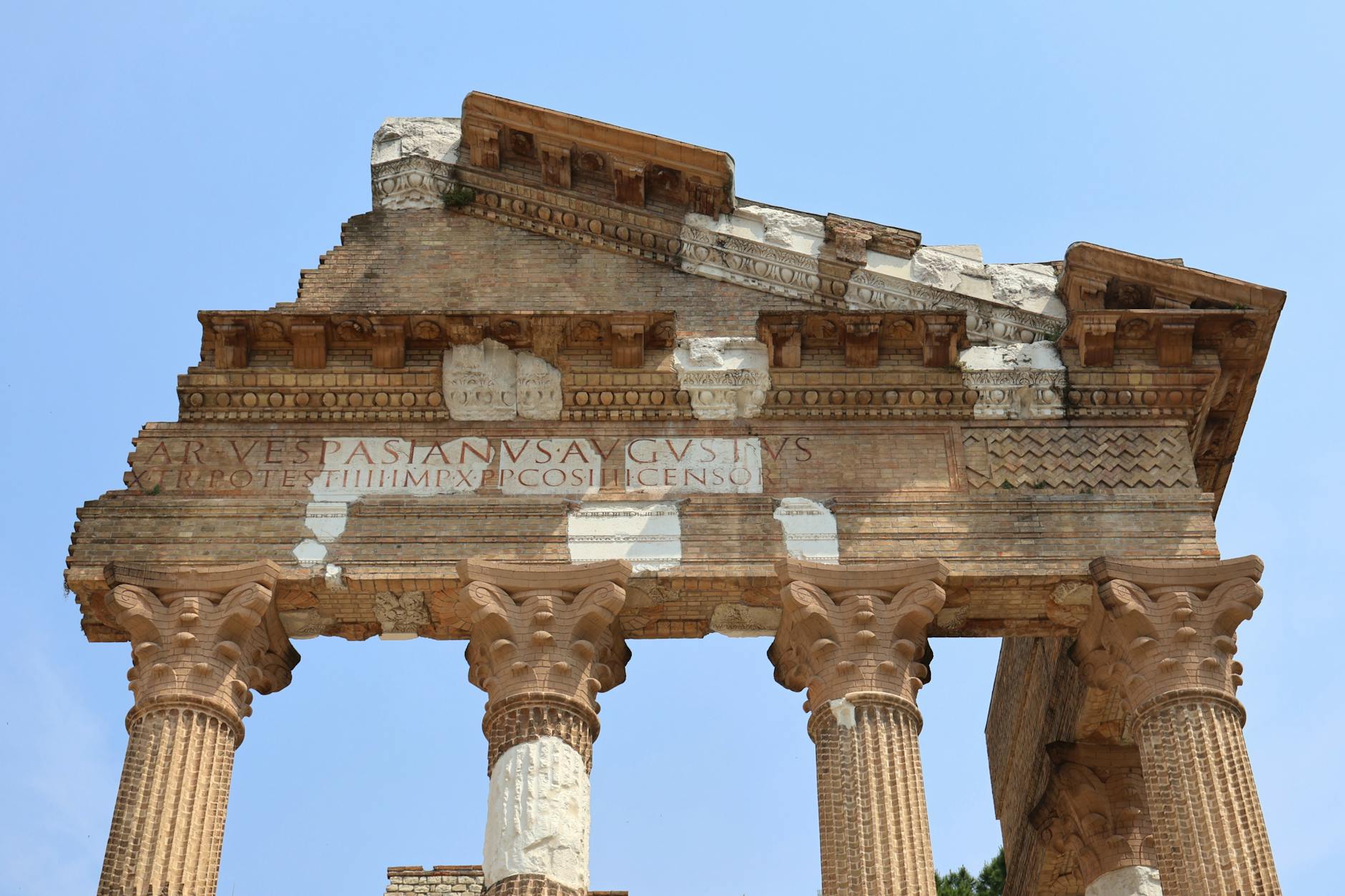
What he did next is preserved in stone. Literally. Fragments of the Edictum De Pretiis Rerum Venalium, the Edict on Maximum Prices, have been found carved into building walls across the eastern empire, from Greece to Turkey to North Africa. It is one of the most detailed economic documents to survive from antiquity, and it is, in almost every structural respect, a document that could have been drafted last decade.
The Anatomy of a Crisis That Looked Very Modern
To understand what Diocletian was responding to, you have to understand the century that preceded him. The Crisis of the Third Century — roughly 235 to 284 AD — was a sustained catastrophe of civil war, plague, and external pressure that shredded Roman institutional confidence. To fund perpetual military campaigns, successive emperors debased the silver denarius repeatedly. By the time Diocletian consolidated power in 284, the coin that had once been 90 percent silver contained perhaps two to five percent. The money supply had expanded dramatically. Prices had followed.
This is not a complicated economic sequence. It is the same sequence that plays out whenever a government expands its money supply faster than productive output grows. The Roman version was accomplished with shears and an alloy furnace rather than a printing press, but the mechanism — and the result — were identical.
What is particularly instructive is the narrative Diocletian attached to the crisis. The edict's preamble, which survives in reasonable condition, does not frame inflation as the consequence of currency debasement. It frames it as the consequence of greed. Merchants and traders are described as rapacious, as enemies of the common good, as men who would charge a soldier four times the fair price for a simple good simply because they could. The edict opens, essentially, as a public denunciation.
Any American who lived through 2021 and 2022 will recognize that framing immediately.
Price Controls, Then and Now
The edict itself was breathtaking in its ambition. It set maximum prices for over 1,000 goods and services: specific grades of wheat, beef, pork, fish, wine, olive oil, clothing sorted by fabric and quality, and a remarkable range of skilled labor — teachers, lawyers, sewer cleaners, camel drivers, and barbers all received their own line items. The penalty for exceeding the listed price, or for withholding goods from the market to circumvent the controls, was death.
The policy failed within a few years. The historical record on exactly why is imperfect, but the economist Lactantius, writing shortly after Diocletian's reign, was not subtle about the cause: goods disappeared from markets rather than being sold at a loss, scarcity replaced high prices, and enforcement became impossible at scale. The controls were quietly abandoned.
This is not a Roman peculiarity. Price controls imposed under similarly urgent political circumstances — the United States during World War II being a partial exception, where they functioned tolerably under conditions of extreme national mobilization and genuine rationing infrastructure — have a consistent track record of producing shortages rather than stability. The underlying economic logic is straightforward: if the controlled price falls below what it costs to bring a good to market, producers stop bringing it to market. The good does not become more affordable. It becomes unavailable.
What makes Diocletian's edict historically significant is not that it failed. It is that the political logic behind it was so recognizable. The emperor needed to be seen acting. The public needed someone to blame. Merchants were a convenient target — visible, profit-motivated, and not particularly sympathetic to a population already in distress. The edict served a psychological and political function regardless of its economic efficacy.
The Psychology Beneath the Policy
Here is the uncomfortable argument that history keeps making: the public's emotional response to inflation is not irrational. When prices rise faster than wages, real living standards fall. That is a genuine harm, and the anger it produces is proportionate. The problem is not that people are angry. The problem is that the anger is consistently directed by political actors toward explanations — greedy merchants, foreign speculators, hoarders, profiteers — that are emotionally satisfying but economically secondary.
In most inflationary episodes, the primary driver is monetary: too much currency chasing too few goods. The merchants raising prices are, in the main, responding to the same cost pressures their customers are experiencing, and passing them forward. They are a transmission mechanism, not the source. But "the government expanded the money supply beyond productive capacity over an extended period" is both harder to explain and harder to act on than "merchants are cheating you, and we are going to stop them."
Diocletian understood this intuitively, even if he lacked the vocabulary for it. So did Richard Nixon, whose 1971 wage and price controls were accompanied by pointed rhetoric about corporate greed. So did the governments of Venezuela, Zimbabwe, and Argentina at various points in the twenty-first century, each of which combined currency expansion with price controls and each of which produced shortages that compounded the original crisis.
The pattern is consistent enough that it probably tells us something not about any particular government's cynicism, but about the structural incentives of governance itself. Controlling the money supply requires restraint. Blaming merchants requires a press conference.
What History Suggests Actually Works
The historical record on inflation resolution is less dramatic than its record on inflation causation, but it is reasonably clear. Stabilization episodes that succeeded — Rome's own monetary reforms under Constantine, the German currency reform of 1923, the Volcker disinflation in the United States in the early 1980s — shared several features. They involved credible reductions in the rate of monetary expansion. They accepted short-term economic pain rather than attempting to legislate it away. And they were, without exception, politically costly for the leaders who implemented them.
Volcker's interest rate increases produced a sharp recession. He was burned in effigy. The policy worked.
Diocletian's edict produced shortages. The merchants were blamed again. The policy was abandoned.
The distance between those two outcomes is not a matter of ancient versus modern sophistication. It is a matter of whether political systems can sustain the gap between what feels like action and what constitutes action. That gap — between the satisfying gesture and the effective remedy — is where most of economic history actually lives.
Your news feed will keep running versions of this story. The names will change. The edict will not.