The Inherited Label: America's Long Habit of Wearing Someone Else's Name
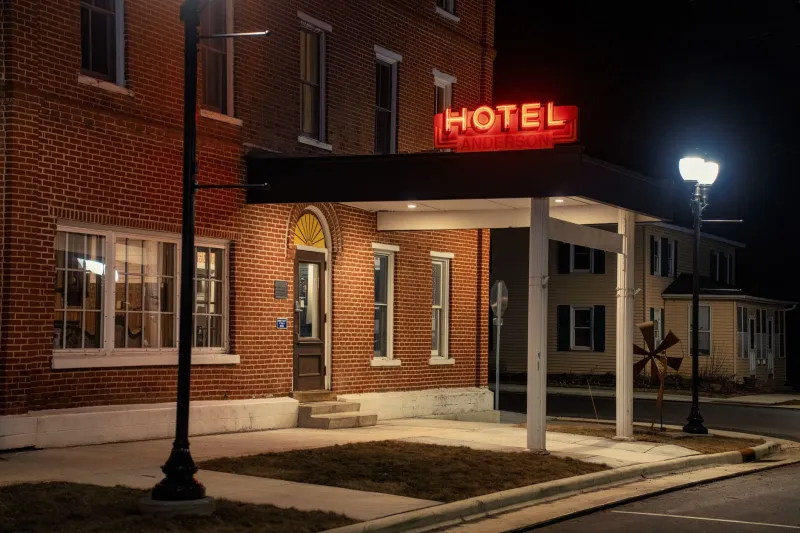
There are, by most counts, more than thirty places in the United States named Springfield. There are dozens of Georgetowns, scores of Clintons, and at least one Athens in nearly every state east of the Mississippi. Ohio alone contains a Rome, a Carthage, a Troy, a Utica, a Medina, and a Corinth—a full roster of the ancient Mediterranean world, laid out across a landscape those civilizations never touched.
This is not coincidence, and it is not mere sentimentality. It is a pattern of behavior that reveals something specific and largely unexamined about how Americans have always understood the relationship between a name and the thing it describes.
The Prestige Transaction
When a group of settlers in the Ohio Territory of the early nineteenth century gathered to name their new village, they were engaged in an act that was simultaneously civic, commercial, and psychological. A name was not simply an identifier. It was a claim—on the future, on potential investors, on the imagination of anyone who might read a land company advertisement in an Eastern newspaper.
Classical names carried particular weight in the early republic, for reasons that were partly ideological and partly mercantile. The founding generation had saturated public discourse with Greek and Roman references, and the association between ancient democracy and American self-governance was not merely rhetorical. It was aspirational. To call your town Athens was to assert that what was happening there—the clearing of land, the platting of lots, the construction of a courthouse—was continuous with the highest achievements of Western civilization. The assertion was audacious to the point of absurdity. It was also effective.
Land speculators understood this mechanism with particular clarity. A town called Athens or Rome or Utica arrived on the market pre-loaded with borrowed dignity. It suggested permanence, culture, and the kind of civic seriousness that justified purchasing a lot and building a life. The name was, in the most literal sense, collateral. It could be borrowed against.
The English Village and the Homesick Founder
Not all borrowed names were classical. A substantial portion of American place names are simply English village names transplanted wholesale—Bath, Bristol, Cambridge, Exeter, Gloucester, Portsmouth, Salisbury—often by founders who had left those places within living memory and who were engaged in something more complicated than nostalgia.
The transplanted English name served a dual function. For the founder, it was a form of psychological continuity, a way of asserting that the social order being built in the wilderness was not a rupture with the past but an extension of it. For potential settlers and investors, it was a signal about the character of the community being offered. A town called Cambridge implied educated inhabitants. A town called Exeter implied a certain kind of Protestant seriousness. The name was a brand promise made before the town had done anything to earn it.
This practice was not unique to Americans. Colonial naming patterns across the British Empire followed similar logic—Calcutta's British quarter, Australian Sydney, New Zealand's Christchurch. But the American version had a particular intensity, because American settlement was so often driven by speculative capital rather than imperial administration. There was no Crown authority to name the town. There was only the land company, and the land company's interest in selling lots.
The Springfield Problem
The proliferation of Springfields deserves particular attention because it illustrates a dynamic that the classical and English-village examples obscure. Springfield is not a prestigious name. It does not invoke ancient democracy or English rectitude. It is a pleasant, generic, vaguely pastoral designation that could apply to almost any settlement near a spring and a field—which is to say, almost any settlement in pre-industrial America.
The reason there are so many Springfields is not that dozens of communities independently and simultaneously reached the same conclusion about their landscape. It is that Springfield was the kind of name that generated no objections. It offended no faction, privileged no ethnic group, and required no classical education to pronounce. In communities divided by origin, religion, and political allegiance, the generic name was the diplomatic name. It was borrowed not from prestige but from the vast common stock of English-language landscape description, and it was chosen precisely because it meant nothing in particular.
This is a different kind of borrowing than the Ohio communities that named themselves after Mediterranean city-states, but it reflects the same underlying psychology: the name was chosen for its effect on an audience, not for its accuracy as a description.
Cultural Confidence and Its Absence
The question that the pattern of American place naming keeps raising—and keeps refusing to answer directly—is what it indicates about the cultural confidence of the people doing the naming.
One interpretation is that the borrowing reflects insecurity: a young nation without a settled cultural tradition reaching for the prestige of older ones, unable to trust that its own landscape and experience could generate sufficient meaning. On this reading, the dozens of American Athenses are a kind of collective apology for not being the real thing.
Another interpretation is nearly the opposite. To name your raw frontier settlement Athens was not to acknowledge inferiority. It was to make an aggressive claim—to assert that the civilizational project being conducted in that particular river valley was the legitimate heir to the Greek experiment, not a diminished copy of it. The name was not borrowed in the way a student borrows a book. It was seized in the way a revolutionary seizes a flag.
Both interpretations are probably partly correct, which is itself revealing. The same act of naming could express confidence and anxiety simultaneously, because the two emotions are not opposites. They are, in the psychology of individuals and communities alike, frequent companions.
What the Name Replaced
There is a dimension of this history that the celebratory accounts of American place naming tend to omit. The European and classical names that settlers chose almost always replaced names that already existed—Indigenous names that encoded centuries of geographic and ecological knowledge about the places being renamed.
The Ohio River takes its name from the Seneca word for large creek. The Mississippi is an Ojibwe description of a great river. Dozens of American states, cities, and physical features retain Indigenous names, often in modified form, because those names were too well established to displace entirely. But the towns—the speculative settlements, the county seats, the railroad junctions—were almost universally renamed, because they were new enough that the erasure was possible.
The borrowed European name did not simply assert prestige. It also asserted priority—the claim that the history of this place began with the arrival of people who named it in a European language. That claim was false, but it was legible to the audience that mattered for land sales, which was the Eastern investor reading a promotional pamphlet in Philadelphia or New York.
The Name Outlasts the Reason
Most of the towns that borrowed their names in the eighteenth and nineteenth centuries have long since stopped thinking about why they chose them. Athens, Ohio does not spend much civic energy on its relationship to ancient Greece. Springfield, wherever you find it, is not generally preoccupied with springs or fields.
The name, once fixed, becomes simply the name—a fact about the place rather than a claim about it. The prestige transaction, the diplomatic compromise, the speculative gambit, the act of erasure: all of it recedes into the background noise of local history, remembered if at all as charming origin-story material for the town centennial booklet.
But the mechanism that produced the name has not changed. Communities still borrow identities—from successful neighboring cities, from national brands, from whatever cultural reference promises to attract the kind of resident or investment the community wants. The vocabulary is different. The behavior is not.