Sacred Miles, Souvenir Stands: The Medieval Pilgrimage Routes That Built the Modern Tourism Industry
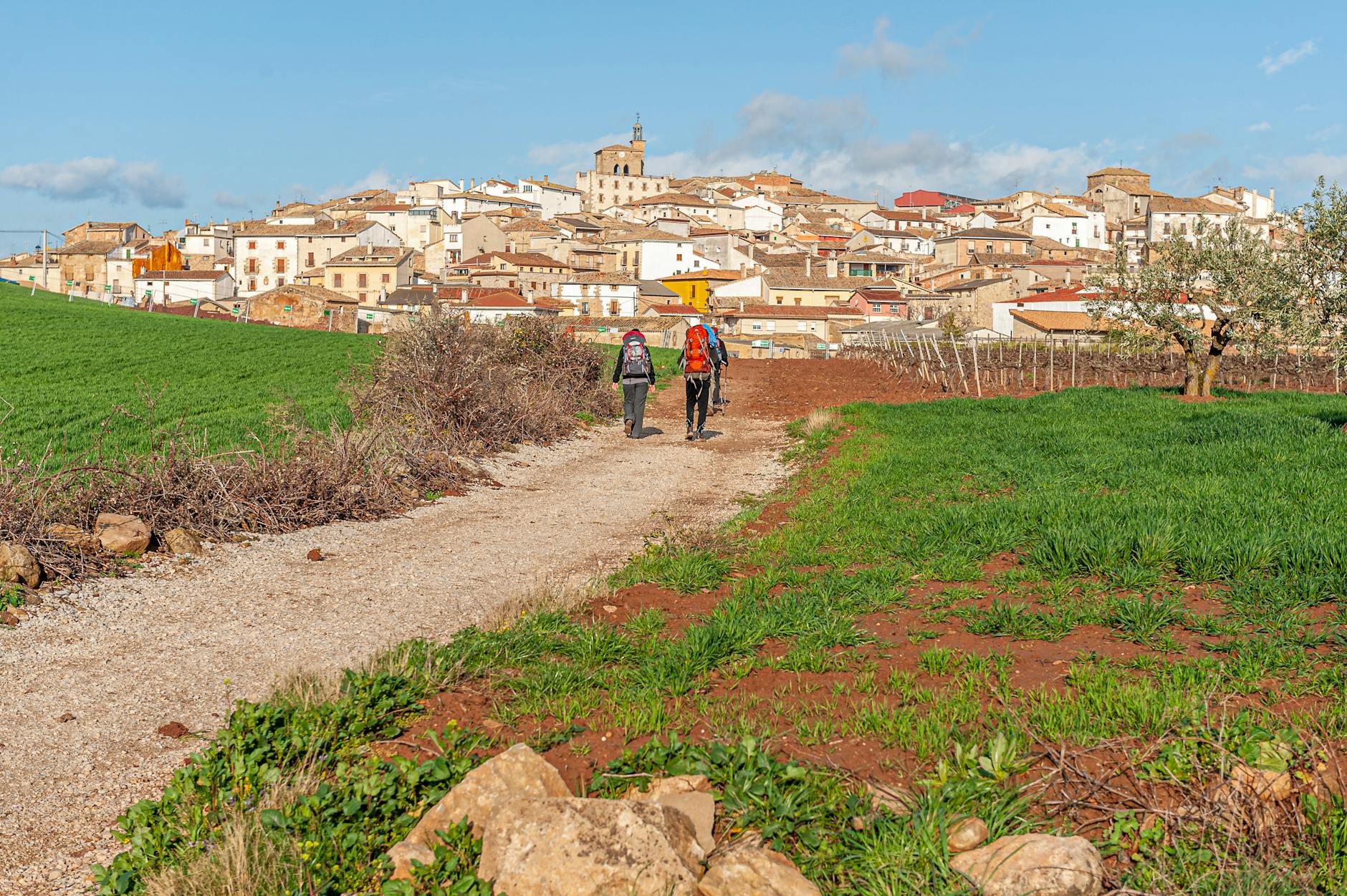
Sacred Miles, Souvenir Stands: The Medieval Pilgrimage Routes That Built the Modern Tourism Industry
Consider the pilgrim.
It is the twelfth century. You have walked, depending on your starting point, somewhere between two weeks and three months to reach the shrine of Saint James at Santiago de Compostela in northwestern Spain. Your boots are destroyed. Your savings are largely spent. You are standing in the Plaza del Obradoiro staring up at a cathedral that took generations to build, surrounded by hundreds of other people who made the same journey from across Europe, and vendors are offering you a scallop shell — the official badge of the Compostela pilgrimage — at a price that seems, frankly, unreasonable given that you just walked across a continent to earn the right to carry one.
You buy the shell anyway.
This transaction, repeated in some form at every major pilgrimage destination in medieval Europe, is not a corruption of the spiritual impulse that brought you there. It is, as history keeps demonstrating, what happens when the spiritual impulse scales up. The commodification of meaning is not a late-capitalist invention. It is a constant of human nature, and the medieval pilgrimage economy proves it with extraordinary documentary precision.
Building the Infrastructure of Faith
The three great pilgrimage routes of medieval Western Christendom — the Camino de Santiago to Galicia, the road to Canterbury in England made famous by Chaucer, and the Via Francigena to Rome — were not spontaneous phenomena. They were, over time, deliberately engineered travel corridors, and the engineering was as practical as it was devotional.
The problem of moving large numbers of travelers across hundreds of miles required solutions that would be immediately recognizable to any modern infrastructure planner. Pilgrims needed places to sleep, food, water, medical attention, currency exchange, and protection from bandits. The Church, municipal governments, and private entrepreneurs all moved to fill those needs, and in doing so they created institutions that are the direct ancestors of the modern hospitality industry.
The hospice — originally a religious institution providing free or low-cost lodging to pilgrims — evolved along the major routes into a tiered system that would not look out of place on a modern booking platform. Basic accommodation was available at monastic houses. Better-quality lodging, with actual beds rather than communal floors, emerged in privately operated inns that charged by the night. By the thirteenth century, the routes to Santiago and Rome supported dense networks of commercial establishments that competed for pilgrim business, maintained reputations across long distances through word of mouth, and occasionally engaged in the kind of sharp practice that kept travelers perpetually wary.
The Pilgrim's Guide — the twelfth-century section of the Codex Calixtinus that served as a practical travel handbook for the Camino — warns pilgrims explicitly about dishonest innkeepers, bad water sources, and locals who would attempt to charge them for river crossings that were, by rights, free. It reads, in tone and function, almost exactly like a cautionary travel blog post. The author's irritation at being overcharged at a specific ford in Navarre crosses nine centuries without losing any of its relatability.
The Relic Market and the Art of Selling the Sacred
If the lodging industry was the backbone of the pilgrimage economy, the relic trade was its most audacious expression — and its most instructive one.
Relics — the physical remains of saints, or objects associated with sacred figures — were the primary attraction at every major shrine. They were also, by the high medieval period, a market operating at a scale and with a sophistication that bordered on the industrial. Major shrines competed for the most impressive relics. Theft of relics from rival churches — furta sacra, or sacred theft — was not only practiced but theologically rationalized: if a saint's remains allowed themselves to be taken, the reasoning went, the saint must have approved.
Around the major shrines, secondary markets in relic-adjacent merchandise flourished. Ampullae — small lead flasks containing water or oil that had touched the shrine — were sold at Canterbury in enormous quantities, stamped with the image of Thomas Becket and priced for the mass market. Badges cast in lead or pewter depicting the relevant saint or shrine symbol were sold at every major destination; archaeologists have recovered thousands of them from riverbed deposits across Europe, apparently lost or discarded by returning pilgrims in a gesture that may itself have been ritualistic.
And then there were the outright fakes.
The market in fraudulent relics was sufficiently extensive that it attracted satirical attention from some of the sharpest writers of the medieval period. Chaucer's Pardoner — one of the most memorable figures in the Canterbury Tales — travels with a pillowcase he claims contains Our Lady's veil and a glass jar full of pig's bones he sells as saints' relics. He is not presented as an anomaly. He is presented as a recognizable type, a known hazard of the pilgrimage economy, the kind of operator every experienced traveler had already encountered or been warned about.
Erasmus, visiting the shrine of Thomas Becket at Canterbury in the early sixteenth century, described the relic display with a mixture of awe and barely suppressed skepticism. The collection included, among other things, a piece of the True Cross, which — as various writers of the period noted with increasing candor — appeared to exist in quantities sufficient to build a small house if all the claimed fragments were ever assembled.
The pilgrim buying a splinter of the True Cross in a Canterbury side alley in 1190 and the traveler paying forty dollars for a skyline snow globe at an airport gift shop are not separated by a chasm of sophistication. They are connected by a continuous thread of human behavior: the desire to bring home a physical object that encodes the emotional significance of a journey, and the willingness of markets to supply that desire at whatever price the traffic will bear.
The Guidebook and the Managed Experience
The Codex Calixtinus was not the only practical travel guide produced for medieval pilgrims, but it is the most complete surviving example, and its existence alone makes a significant point. By the mid-twelfth century, the Camino de Santiago had generated a substantial body of what we would now call travel content: route descriptions, accommodation recommendations, warnings about local hazards, and cultural notes about the peoples and places a traveler would encounter.
The guide describes the stages of the journey in terms that any modern long-distance traveler would recognize — daily distances, notable landmarks, quality of water sources, recommended stopping points. It evaluates the character of regional populations with the confident generalization of a Yelp reviewer: the Navarrese are described as uncouth and untrustworthy, the Galicians as comparatively civilized. Whether these assessments were accurate is less interesting than the fact that they were made, distributed, and apparently consulted by actual travelers.
The managed pilgrimage experience extended beyond text. The physical route itself was maintained, marked, and in some stretches actively curated. Bridges were built and maintained by religious confraternities specifically to facilitate pilgrim passage. Hospitals — in the original sense of hospice institutions — were positioned at intervals calculated to match reasonable daily walking distances. The route was, in modern terms, a designed user experience, and the design was both genuinely pious and commercially rational.
What the Old Routes Are Actually Telling Us
The deeper argument embedded in the pilgrimage economy is one that tends to make people slightly uncomfortable, because it complicates two narratives that are each, in their way, flattering.
The first narrative is the nostalgic one: that medieval pilgrims traveled with a purity of spiritual purpose that modern tourism has corrupted. The documentary record does not support this. Medieval pilgrims were sold fake relics, overcharged at inns, warned about dishonest ferry operators, and offered mass-produced devotional merchandise at every major shrine. The commercialization was not incidental to the pilgrimage system. It was structural.
The second narrative is the progressive one: that the crass commercialization of travel is a symptom of modern capitalism's tendency to commodify everything it touches. This is also not supported. The relic market, the souvenir badge trade, the tiered accommodation system, and the professional guidebook all predate capitalism by several centuries. They emerged wherever large numbers of people traveled with emotional stakes, because emotional stakes create willingness to spend, and willingness to spend creates markets.
What the old routes are actually telling us is something more interesting than either narrative allows. Human beings travel in search of meaning. They want to mark the journey with objects. They want their experience validated, guided, and remembered. And wherever those desires concentrate, infrastructure and commerce follow — not as a corruption of the impulse, but as its natural expression at scale.
The scallop shell sold outside the cathedral at Santiago in 1180 and the magnet sold in the gift shop at the Lincoln Memorial in 2024 are the same transaction. The only thing that has changed is the saint.