The Permanent Audition: How American Towns Learned to Perform for an Audience That Was Never Coming
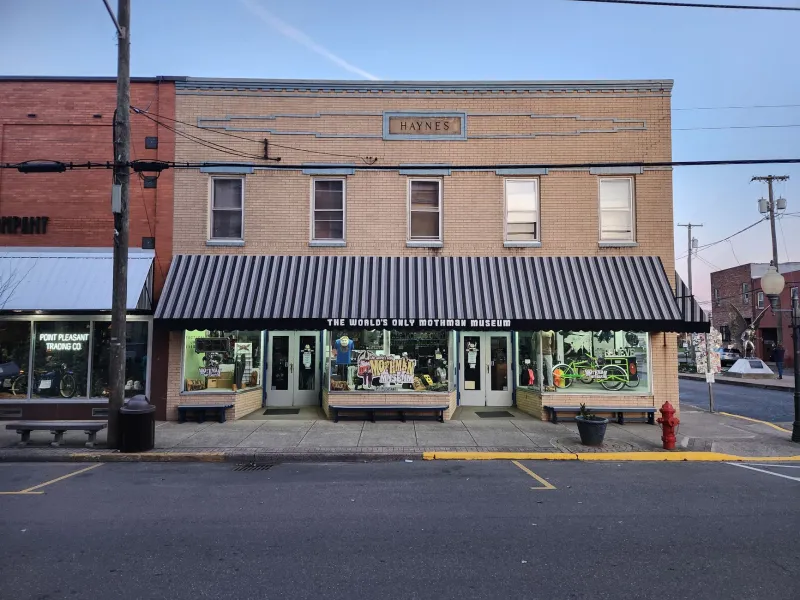
There is a particular kind of American downtown that announces itself before you have fully arrived. The storefronts are freshly painted in colors selected by committee. The sidewalks are wide and recently poured. Hanging flower baskets appear at intervals calculated to suggest organic charm. A mural on the side of a former hardware store depicts the town's founding, rendered in a style that implies authenticity without committing to any particular era. The whole effect is of a place that has recently been informed it might be photographed.
This is not a new phenomenon. It is, in fact, one of the oldest continuous traditions in American civic life—and understanding where it came from requires going back considerably further than the Instagram era.
The Investors Were Always Coming
The railroad transformed nineteenth-century America not only as a transportation system but as an attention economy. A town that secured rail access survived; a town that did not frequently did not. This meant that the arrival of a railroad survey team, a land speculator, or a company agent was among the most consequential events a community could experience—and communities responded accordingly.
Booster literature from the 1850s through the 1890s is a remarkable archive of human self-presentation. Pamphlets describing frontier settlements as thriving commercial centers were distributed in eastern cities and European capitals with a confidence that bore little relationship to the actual conditions on the ground. Towns that existed primarily as aspirations were described in language borrowed from established metropolises. Population figures were estimated generously. The soil was invariably described as the richest in the territory. The climate was always salubrious.
The physical built environment followed the same logic. A town that expected railroad investment—or simply hoped for it—built its main street to communicate permanence and prosperity. Brick facades went up on wooden frames. Ornate cornices appeared on buildings that housed nothing more elaborate than a dry goods counter. The architectural vocabulary of commercial confidence was deployed not because the confidence existed but because confidence, visibly performed, might attract the investment that would justify it.
This was not fraud, exactly. It was theater in the service of genuine aspiration. But it established a pattern that has proven extraordinarily durable.
The Audience Shifts; the Performance Continues
The railroad speculators were eventually replaced by other imagined observers, each requiring a slightly different performance. In the early twentieth century, the audience was the automobile tourist—and the built environment reorganized itself accordingly. Main streets that had faced the railroad depot pivoted toward the highway. Signage grew larger, more legible at speed. Motor courts and filling stations appeared at the town's edges like welcoming committees.
By midcentury, the relevant audience had become the federal grant administrator, the highway planner, the urban renewal official. Towns performed competence and need simultaneously, demonstrating both the capacity to manage federal funds and the deprivation that justified receiving them. The language of these applications—preserved in archives across the country—has the same quality as the Victorian booster pamphlet: a careful construction of the community as outsiders needed to perceive it, rather than as residents actually experienced it.
The shopping mall era brought developers and retail chains into the position of ultimate arbiter. Communities competed to offer tax incentives, infrastructure improvements, and zoning accommodations—performing fiscal responsibility and growth potential for audiences that held the keys to economic survival.
None of this is uniquely American in its basic psychology. The human impulse to manage the impressions of powerful observers is documented across every culture and every era for which records exist. What is distinctively American is the degree to which this performance has been institutionalized—built into the physical fabric of communities, embedded in civic governance, and eventually internalized as the natural purpose of public space.
What the Performance Cost
Every decision made for an external audience is a decision not made for the people who actually live somewhere. This is not a theoretical observation; it has specific, traceable consequences in the American record.
The Victorian main streets built to impress investors were frequently built at a scale and in a style that made no practical sense for the communities they served. Maintenance costs were high. The architectural ambition that signaled prosperity to outsiders was experienced by residents as a financial burden that persisted long after the investor had moved on to the next promising town.
The urban renewal projects of the 1950s and 1960s—designed in significant part to demonstrate modernization to federal audiences—destroyed functional neighborhoods in order to build environments that photographed well and functioned poorly. The communities displaced were rarely the communities consulted. The performance was staged for people in Washington, not for the families whose blocks were demolished to make room for it.
The tourism-oriented revitalization projects of the late twentieth century produced their own version of the same problem. A downtown rebuilt around the expectations of weekend visitors—boutique retail, restaurant clusters, event programming—tends to eliminate the businesses and institutions that serve the people who live there year-round. The hardware store closes; the artisanal candle shop opens. The audience is pleased. The residents drive thirty minutes to buy a furnace filter.
The Instagram Iteration
The current version of this pattern is, in some ways, its most honest expression. The imagined audience is now genuinely imaginary—or rather, it is distributed, anonymous, and constituted by an algorithm. A town that optimizes its public space for social media engagement is performing for no specific observer, but for the aggregate attention of strangers who may never arrive.
The murals are commissioned with hashtags in mind. The public art installations are designed to be photographed in front of. The seasonal decorations are scaled and positioned to work as backgrounds. The entire downtown has been converted into a set.
What is striking, from a historical perspective, is how little the underlying psychology has changed. The Victorian booster who built a brick facade on a wooden frame and the municipal planner who commissions a mural designed to go viral are responding to the same ancient human calculus: the opinion of distant, powerful observers matters more than the experience of local, present ones.
The Permanent Audience
Five thousand years of recorded human behavior suggests that status-seeking is not a correctable error in civic psychology. It is the thing itself. Communities, like individuals, organize themselves partly around how they are perceived by those they wish to impress—and that observation does not become less true simply because the audience keeps changing.
What changes, across eras, is who holds the attention that matters. Railroad agents, federal administrators, retail developers, travel bloggers—each generation produces its own version of the powerful stranger whose favorable notice might transform a community's fortunes.
The old routes that gave American towns their reason for existing—trade paths, river crossings, rail lines—were always also attention corridors. The towns that formed along them understood, from the beginning, that survival required being seen favorably by people passing through. That understanding never left. It simply found new audiences as the old ones moved on.
The performance continues. The audience keeps changing. The towns keep building for strangers and calling it civic improvement.