Before the Road Trip, There Was the Pilgrimage: What Medieval Travelers Knew That We Have Forgotten
Before the Road Trip, There Was the Pilgrimage: What Medieval Travelers Knew That We Have Forgotten
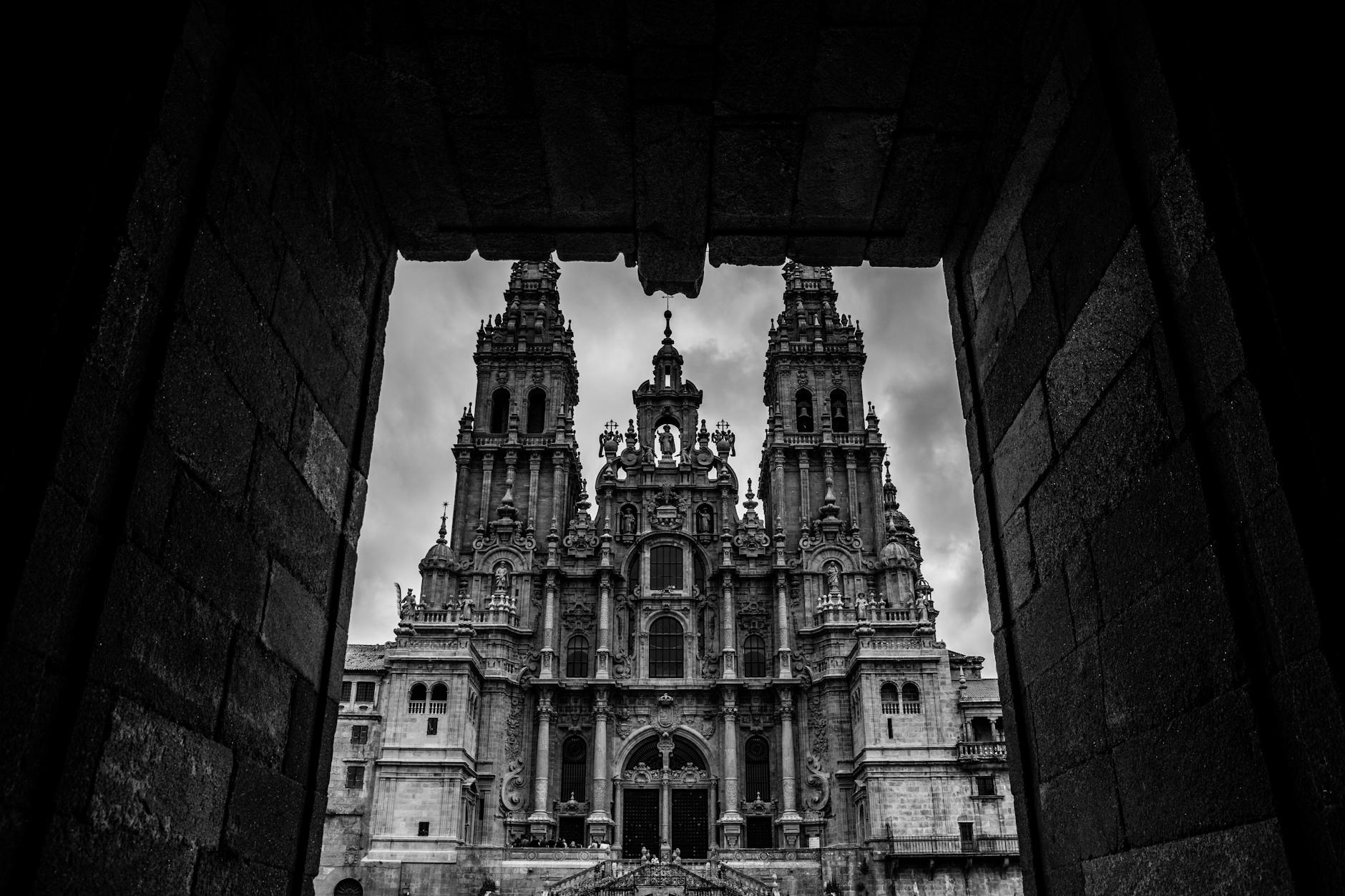
Somewhere on a shelf in a shop near the Cathedral of Santiago de Compostela in northwestern Spain, there is almost certainly a small ceramic scallop shell selling for more than it is worth. It has been this way, in one form or another, for approximately nine hundred years.
The scallop shell is the emblem of the Camino de Santiago, the network of pilgrimage routes that drew hundreds of thousands of medieval travelers across Europe toward the shrine of Saint James. Pilgrims wore the shell to identify themselves, to signal their purpose, to mark their belonging to a temporary community of people in motion. Vendors sold it to them before they arrived, while they walked, and after they reached the cathedral — as a memory, a proof, a talisman against the journey's end.
The American road trip, in its popular mythology, is a product of the twentieth century: the automobile, the interstate highway system, Route 66, Kerouac and the open road. This is a reasonable account of its logistics. It is a poor account of its psychology. The hunger that sends a family west in a loaded minivan, or a retiree alone across the southern states, or a twenty-three-year-old with a tent and a vague plan into the national parks — that hunger is considerably older than internal combustion. It is, in fact, among the most documented impulses in human history.
Understanding where it comes from, and what it has always required to be satisfied, may be the most practical piece of travel advice available.
The Infrastructure of Sacred Routes
Medieval pilgrimage was not a solitary or improvised affair. The major routes — the Camino in Spain, the Via Francigena to Rome, the roads to Canterbury in England, the paths to Jerusalem — supported entire economies. Monasteries positioned themselves strategically along the routes, offering lodging to travelers in exchange for donations and prayers. Towns competed for pilgrim traffic the way modern cities compete for convention business. Bridges were built, roads were maintained, and way-markers were erected — not from abstract civic virtue, but because pilgrims represented revenue.
The parallels to modern highway infrastructure are not superficial. The Howard Johnson's that once anchored every major American interstate exit operated on the same logic as the monastery hospice: predictable traffic, captive customers, and a brand promise (cleanliness, safety, a known quantity) that justified a price premium over the alternative. The rest stop, the welcome center, the chain restaurant visible from the off-ramp — these are functional descendants of institutions that Chaucer's pilgrims would have recognized immediately.
The scams were also familiar. Medieval pilgrimage routes were well-documented hunting grounds for false relics, fraudulent indulgences, and guides who led travelers in circles. The Canterbury Tales themselves pivot on this tension between the sincere and the cynical, between genuine seekers and those who had learned to profit from seeking. Any traveler who has been confidently misdirected by a local, or paid for an attraction that bore no resemblance to its description, is participating in a tradition of considerable antiquity.
What Pilgrims Were Actually Looking For
Here is where the history becomes genuinely useful, because medieval pilgrims were not, in the main, simple people who believed that touching a saint's bone would cure their arthritis. Many of them did believe this, and the belief was sincere. But the documentary record — the letters, the accounts, the poetry — reveals something more layered.
Pilgrims sought interruption. The ordinary conditions of medieval life were, for most people, almost entirely fixed: the same village, the same labor, the same social position, the same faces across the same table. Pilgrimage was one of the very few socially sanctioned reasons to leave. It created a temporary suspension of normal identity and obligation. On the road, a merchant walked beside a nobleman and a peasant beside a scholar, all of them equally blistered, equally dependent on the next hospice, equally subject to weather and distance.
They also sought community. The pilgrimage road was famously social. Chaucer's pilgrims are not a meditation on solitude; they are a portrait of strangers thrown together and making something of it. The accounts of medieval pilgrimage are full of friendships formed in transit, of mutual aid between people who would never have met under ordinary circumstances, of conversations that the fixed world at home would not have permitted.
And they sought transformation. Not always the miraculous kind. The physical ordeal of walking hundreds of miles had a clarifying effect that travelers described in terms that modern readers would recognize as therapeutic. Distance from ordinary life created perspective on it. The journey's difficulty made the destination meaningful in a way that arrival by other means could not.
The Road Trip as Secular Pilgrimage
The American road trip absorbed all three of these functions without ever quite naming them.
The interruption function is explicit in the culture. The road trip is understood to be a break — from work, from routine, from the self that exists in a fixed location surrounded by its fixed obligations. The car as a container for this break is almost ritualistic: the specific playlist, the snacks purchased only for travel, the agreement that normal rules about screen time or diet are suspended for the duration.
The community function operates differently in the American version, which is more often a private journey than a collective one. But the stranger-encounters of the road — the conversation at a gas station, the campsite neighbor, the diner where everyone is from somewhere else — replicate the social dynamics of the pilgrimage road in compressed form. There is a reason road trip stories so frequently feature unexpected human connection. The conditions of travel have always produced it.
The transformation function is the most honestly preserved. Americans describe significant road trips in language that is essentially spiritual. They speak of clarity, of perspective regained, of knowing something after the journey that they did not know before. This is not marketing language. It appears in private journals, in letters, in the accounts people give of formative experiences. The road does something to people that the destination alone does not.
Designing a Trip That Actually Delivers
Understanding the pilgrimage model offers something concrete to the traveler who has returned from an expensive vacation feeling vaguely unsatisfied — who has seen the things, photographed the things, and arrived home no different than when they left.
Medieval pilgrims who reported the most meaningful journeys shared several characteristics that have nothing to do with faith. They had a genuine destination — not simply a place, but a place that carried personal weight. They traveled in a way that created some degree of physical or logistical difficulty, because ease of passage tends to produce ease of experience. They allowed for unscheduled time, because transformation rarely fits an itinerary. And they traveled with some awareness of why they had come, which made them capable of recognizing the answer when they encountered it.
The scallop shell on the shelf in Santiago costs too much. It is made in a factory. It is sold by someone who has watched ten thousand pilgrims pass through and has calibrated the price accordingly. None of this diminishes what it means to the person who buys it after walking five hundred miles.
The souvenir was never really about the object. It was about having been somewhere that mattered, and wanting to carry that mattering back into the ordinary world. Pilgrims understood this. So, if they are honest about it, do most American road trippers.
The old routes and the new ones are, in the ways that count, the same route. They always have been.