When Democracy Chooses Death: The American Towns That Voted Themselves Into History
The Final Vote
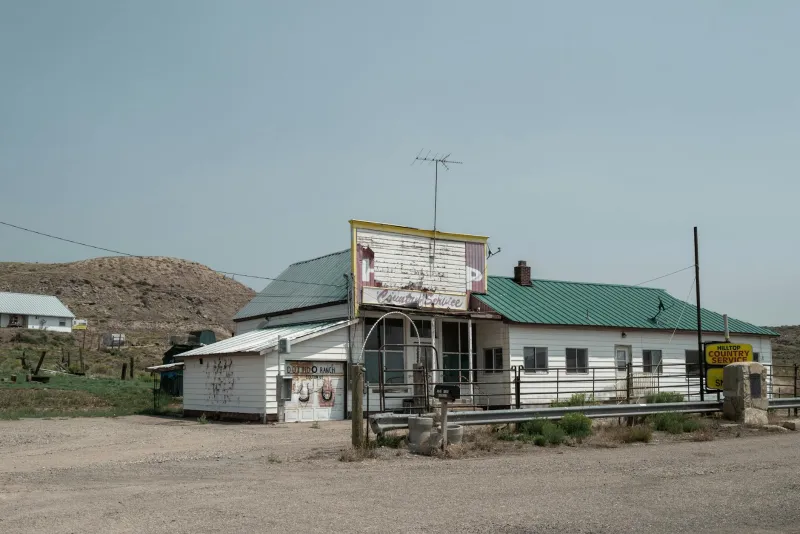
On a Tuesday evening in 2019, the town council of Centerville, Montana, convened for what would be their last official meeting. The agenda contained a single item: a resolution to dissolve the municipal government and surrender the town's charter to the state. The vote was unanimous. Within six months, Centerville had vanished from official maps, its 147 residents absorbed into the surrounding county.
Centerville joined a peculiar American tradition that stretches back nearly four centuries. Since the earliest New England settlements, American communities have repeatedly chosen institutional death over institutional decline. The pattern is so consistent it suggests something fundamental about human psychology when faced with collective failure.
The Puritan Precedent
The first recorded instance occurred in 1638, when the Massachusetts Bay Colony settlement of Merrymount voted to disband after three years of conflict with neighboring Plymouth. Rather than endure gradual dissolution, the community chose immediate, formal extinction. Their reasoning, preserved in colonial records, reveals a psychology unchanged by centuries: "Better to end with purpose than fade without meaning."
This sentiment echoes through American history. In 1847, the California gold rush town of Rough and Ready actually seceded from the United States, declared itself an independent republic, and then voted to dissolve that republic three months later when the gold ran out. The townspeople preferred dramatic conclusion to slow starvation.
The Mathematics of Surrender
Modern research into municipal dissolution reveals a counterintuitive pattern. Towns that vote themselves out of existence typically fare better economically than those that cling to failing institutions. A 2018 study by the University of Wisconsin found that communities choosing dissolution saw average property values rise 23% within five years, compared to a 12% decline in similar towns that maintained failing municipal governments.
The psychology appears unchanged since colonial times. Humans prefer agency in their defeats. The towns that voted for dissolution consistently reported higher community satisfaction scores than those that simply withered away through budget cuts and service reductions.
The Ritual of Collective Ending
The mechanics of municipal suicide follow remarkably consistent patterns across centuries. First comes the recognition phase, where community leaders acknowledge institutional failure. Then follows the deliberation period, typically lasting six months to two years. Finally arrives the formal vote, almost always conducted with greater civic participation than any previous election in the town's history.
This pattern mirrors ancient Greek practices of ostracism, where communities voted to exile prominent citizens before their influence became destructive. The psychological mechanism remains identical: collective action to prevent collective harm.
The Ghost Town Alternative
America's landscape is littered with communities that chose the opposite path. From the abandoned mining towns of Colorado to the empty farming settlements of the Great Plains, thousands of communities simply faded away without formal dissolution. These unintentional ghost towns tell a different story.
Bodie, California, once home to 10,000 residents, never voted to disband. It simply emptied as the mines played out. Today, it exists as a state park, preserved in decay. By contrast, the Montana town of Garnet voted for dissolution in 1912, sold its assets, and distributed the proceeds to residents. Former Garnet citizens used their shares to establish successful businesses in nearby Missoula. The psychology of chosen endings created different outcomes.
The New England Model
New England town meetings, America's purest form of direct democracy, have perfected the art of institutional suicide. Since 1750, over 200 New England townships have voted themselves out of existence. The process follows ancient democratic traditions: open debate, formal motions, recorded votes.
The town of Prescott, Massachusetts, provides the template. Faced with the creation of Quabbin Reservoir in 1938, Prescott's residents could have fought eminent domain through courts. Instead, they voted for dissolution, negotiated better relocation terms, and maintained community bonds by moving together to nearby Athol. Their chosen surrender yielded better results than legal resistance.
The Psychology of Collective Endings
Modern behavioral economics explains what colonial Americans understood intuitively: humans prefer controlled losses to uncontrolled decline. The towns that voted for dissolution exercised what psychologists call "agency preservation" - maintaining decision-making power even in defeat.
This behavior appears throughout history. Roman senators chose suicide over capture. Japanese businesses practice ritualized dissolution rather than bankruptcy. American towns voting themselves out of existence follow the same psychological pattern: death with dignity beats life without purpose.
The Survivor's Advantage
The counterintuitive truth is that communities choosing dissolution often survive in ways that communities choosing persistence do not. When Centerville, Montana, dissolved its government, residents organized private services more efficiently than the failing municipal system had provided. When Prescott, Massachusetts, voted for extinction, its social networks remained intact through relocation.
The pattern suggests that institutional death can preserve community life. The towns that voted themselves out of existence understood what modern management theory has rediscovered: sometimes the best way to save an organization is to kill it before it kills itself.
The Continuing Tradition
Today, dozens of American municipalities consider dissolution annually. The motivations remain unchanged: budget crises, declining populations, failing infrastructure. The psychology remains consistent: collective choice feels better than collective helplessness.
The towns that choose democratic self-destruction are not admitting failure. They are exercising the oldest American tradition: the right to begin again. In a country built on fresh starts, sometimes the freshest start requires a formal ending.
The votes continue because the psychology endures. Americans, like their colonial ancestors, prefer to write their own endings rather than let endings write themselves. Democracy's greatest power may not be its ability to preserve institutions, but its capacity to destroy them cleanly when preservation becomes impossible.