When Institutions Get Nervous, They Ask You to Sign Something
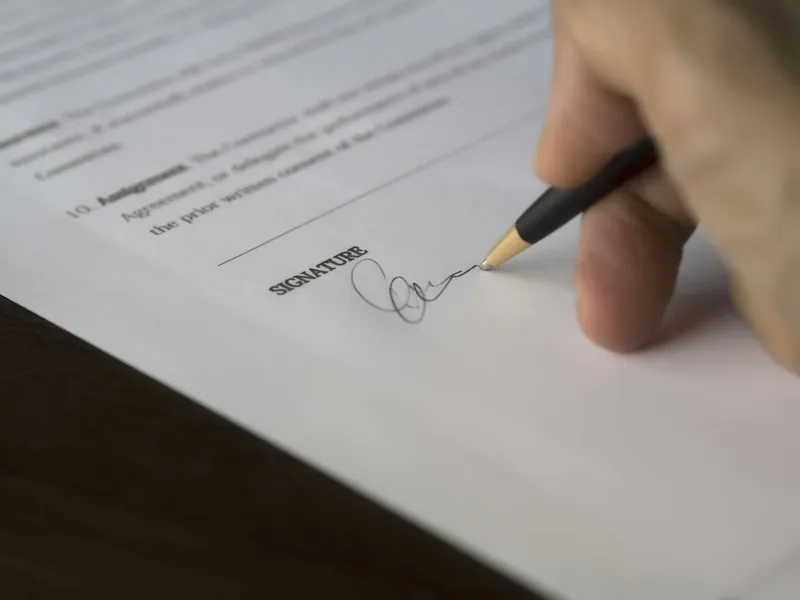
The Signature That Says Everything
In 1950, the University of California fired thirty-one faculty members who refused to sign a loyalty oath declaring they were not members of the Communist Party. The professors argued the oath violated academic freedom. The university insisted it was a reasonable precaution during dangerous times. Both sides understood what was really happening: an institution feeling vulnerable was demanding public performance of allegiance.
This script is older than the university that ran it. The loyalty oath emerges with clockwork regularity whenever power structures sense instability, and the pattern reveals something uncomfortable about human nature — we have always confused compliance with loyalty, and we have always known the difference.
Athens Invented the Loyalty Test
The ancient Athenians, inventors of democracy, also invented the loyalty oath as we know it. The Ephebic Oath required young citizens to swear they would "not disgrace the sacred arms" and would "leave the fatherland greater and better than I found it." Beautiful words that masked an ugly reality: Athens was surrounded by enemies, riven by class conflict, and constantly worried about internal subversion.
The oath worked exactly as intended. It identified who was willing to perform loyalty publicly, sorted the compliant from the resistant, and created a documented record of commitment that could be weaponized later. The Athenians understood that making someone sign something changes the relationship between signer and institution forever.
What they also understood, though rarely admitted, was that genuine loyalty rarely requires documentation. The citizens most devoted to Athens were often the ones who questioned whether swearing oaths was what devoted citizens should be doing.
The American Tradition of Mandatory Patriotism
The United States has been asking people to sign loyalty oaths since before it was officially the United States. The Continental Congress required loyalty pledges from anyone suspected of British sympathies. The Civil War produced loyalty oaths for federal employees, teachers, and even people who wanted to practice law. World War I brought oaths for immigrants. World War II brought them for defense workers.
The Cold War turned oath-signing into a national obsession. Federal employees, teachers, union leaders, and eventually anyone who wanted a passport found themselves swearing they had never been members of organizations dedicated to overthrowing the government by force or violence. The lists of prohibited organizations grew longer each year, including groups most Americans had never heard of.
The pattern was always the same: external threat creates internal anxiety, internal anxiety demands visible proof of loyalty, visible proof becomes the measure of citizenship. The oath signers understood they were participating in political theater, but political theater with real consequences for non-participants.
Corporate America Discovers the Loyalty Business
The modern corporation has refined the loyalty oath into something more subtle and arguably more invasive: the employee engagement survey. Companies spend billions measuring worker loyalty through questionnaires that ask employees to rate their commitment, their belief in company values, and their likelihood of recommending the organization to others.
The questions sound voluntary. The participation feels mandatory. The results determine promotions, assignments, and who survives the next restructuring. The survey has become the loyalty oath of the cubicle age — a ritual that sorts the enthusiastic from the merely competent, the team players from the potential problems.
Employees understand exactly what they are being asked to perform. They know their answers are being recorded, analyzed, and used to make decisions about their futures. They know that expressing genuine concerns about company direction or management competence is career suicide disguised as feedback opportunity.
The most telling aspect of corporate engagement surveys is how they mirror the loyalty oaths of previous eras: they emerge when companies feel threatened by competition, economic uncertainty, or worker dissatisfaction. Healthy organizations with confident leadership rarely need to measure loyalty with such precision.
The Tell That Never Lies
Every loyalty oath in history has claimed to protect something precious — democracy, national security, corporate culture, organizational effectiveness. The stated purpose is always noble. The actual function is always the same: identifying and isolating internal resistance to institutional authority.
The oath serves as an early warning system for power structures under stress. When institutions start asking people to sign pledges of allegiance, they are revealing their own insecurity more than testing anyone else's loyalty. The healthy organization, like the healthy relationship, operates on demonstrated trust rather than documented promises.
This explains why loyalty oaths consistently backfire over time. They identify the compliant, not the loyal. They reward performance over principle. They drive away exactly the kind of independent-minded people institutions need most during actual crises.
The Old Route Forward
The loyalty oath persists because it satisfies a deep human need to sort allies from enemies, insiders from outsiders, the trustworthy from the suspect. But five thousand years of evidence suggests that making people sign loyalty pledges tells us more about the fears of those demanding signatures than the faithfulness of those providing them.
Institutions that demand loyalty oaths reveal their own weakness. Citizens who sign them understand they are participating in political theater. The signature itself becomes a form of communication — not about loyalty, but about power, compliance, and the price of belonging.
The next time someone asks you to sign a loyalty oath, remember that healthy institutions rarely need one. The signature they want says more about their anxiety than your allegiance, and everyone involved knows exactly what they are really asking you to do.