The Distant Patron: Why American Towns Have Always Trusted the Investor Who Was Never Coming Back
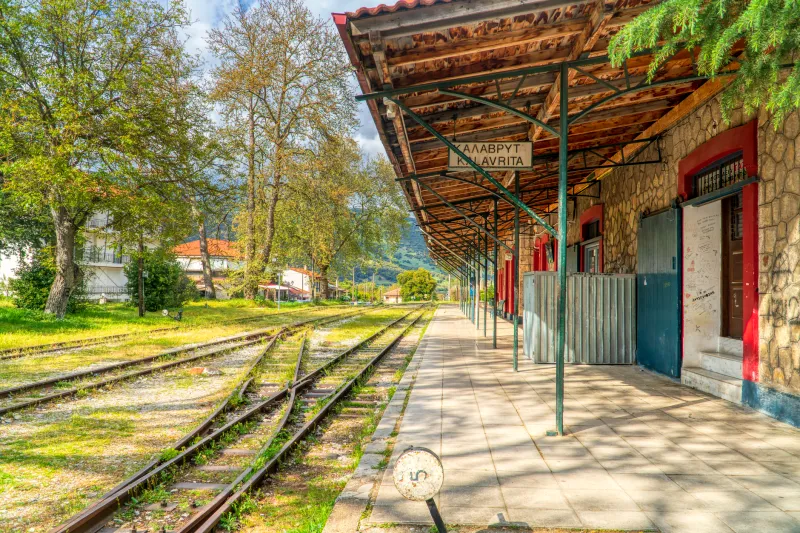
In the spring of 1869, the citizens of Abilene, Kansas, did not transform their town. A cattle broker from Illinois named Joseph McCoy did. He arrived with outside capital, outside connections, and outside authority — and within a season had constructed the stockyards, negotiated the rail contracts, and established the commercial infrastructure that turned a struggling post-road settlement into the first major terminus of the Chisholm Trail. The people of Abilene had lived there for years. It took a stranger with money from elsewhere to build what they could not, or would not, build themselves.
This pattern has repeated so consistently across American history that it has ceased to register as remarkable. It should not have.
The Local Capitalist's Dilemma
Local wealth is, by definition, already invested in the existing order. The merchant who has built a profitable dry-goods business under current conditions has a stake in those conditions persisting. The banker whose portfolio is concentrated in existing local enterprises has every incentive to lend conservatively and to resist disruptions that might devalue what he already holds. The prominent family whose social standing is tied to the current distribution of prestige has reasons — not always conscious ones — to be skeptical of changes that might redistribute that standing.
This is not a moral failing. It is a structural one. The local capitalist is embedded in the community in ways that make bold transformation genuinely costly at a personal level. The outside investor is not. He has no social relationships to protect, no existing business model to defend, no position in the local hierarchy to risk. His indifference to local equilibrium is not a deficiency. It is, paradoxically, his primary qualification.
Historians of economic development have documented this dynamic across vastly different contexts. The merchant communities of Renaissance Florence depended heavily on capital from distant Florentine banking networks to finance ventures that local Venetian or Genoese capital would not touch — not because the Florentines were wiser, but because they were outside the social constraints that made local investors cautious. The foreign merchant has always been, in some sense, free in ways the local merchant cannot afford to be.
The Railroad and the Template
The most legible version of this pattern in American history is the railroad era. Between roughly 1850 and 1910, the transformation of the American interior was accomplished almost entirely by capital assembled in New York, Boston, London, and Amsterdam — capital that had no organic relationship to the communities it was reshaping and no particular loyalty to any of them.
The consequences of this arrangement were, by any measure, mixed. Towns that the railroads favored became cities. Towns that the railroads bypassed shrank or vanished. The outside investors who drove this process were not, in any serious sense, acting in the interest of the communities they transformed. They were acting in the interest of their shareholders. The benefit to the towns was real but incidental.
And yet communities competed ferociously for the attention of these outside investors. They offered land grants, tax exemptions, and public subsidies to attract capital that they understood perfectly well was not coming out of affection for them. The psychological transaction was peculiar: communities suppressed their own legitimate skepticism about outside investors' motives in order to access capital they had concluded they could not generate internally.
This suppression was not irrational. It was, in most cases, correct. The railroad did come. The town did grow. The fact that the outside investor profited enormously — often more than the community did — did not negate the genuine transformation that occurred.
The Self-Doubt Beneath the Welcome
There is something worth examining carefully in the enthusiasm with which American communities have historically received outside investment. It is not simply pragmatic calculation, though it contains that. It reflects a persistent local conviction that the community lacks, in itself, the capacity to generate its own transformation.
This conviction is, in many cases, accurate. Small communities genuinely do lack the capital concentration to fund major infrastructure or industrial development. But the conviction runs deeper than the math. It runs into something that resembles a structural deference — a belief that the outside investor sees something in the community that the community cannot see in itself, and that his willingness to invest constitutes a kind of validation.
This dynamic is visible in the language communities use when announcing major outside investments. The press release does not say: a distant party has identified a profitable opportunity in our market. It says: a leading national firm has recognized the potential of our community. The framing is revealing. The investment is received not as a commercial transaction but as a verdict — evidence that the community is, after all, worth something.
Social psychologists have documented the tendency of individuals to assign greater credibility to assessments from strangers than from people who know them well. The logic is not entirely unreasonable: the stranger has less incentive to flatter. But it produces a systematic undervaluation of local knowledge and local judgment that has real consequences for how communities make development decisions.
Venture Capital and the Newest Version of an Old Story
The contemporary version of this pattern is legible in the geography of venture capital investment. American cities that have attracted significant outside venture investment — Austin, Denver, Miami in its recent iteration — have experienced transformations in their commercial and cultural landscapes that decades of local investment did not produce. The outside capital did not arrive because local investors were unaware of the opportunity. In many cases, local investors had passed on the same opportunities for years.
The outside investor's advantage is not informational. It is, again, structural. The venture capitalist from San Francisco investing in an Austin startup carries none of the social weight that makes a local investor cautious about backing a founder who might fail publicly and embarrassingly within the same community. The distance that might seem like a disadvantage — the investor doesn't know the community, doesn't understand its particular dynamics — turns out to be an asset.
What the Pattern Costs
The consistency of this pattern across centuries and contexts does not make it cost-free. Communities that systematically defer to outside capital in preference to local investment gradually lose the institutional capacity to evaluate their own potential. The habit of waiting for external validation becomes, over time, a genuine incapacity for self-directed development.
The towns that were built by railroads and then abandoned by railroads discovered this the hard way. The outside investor who transforms a community retains, always, the option of leaving. The community does not retain the option of being un-transformed. The changes that outside capital makes to a place — the physical infrastructure, the demographic shifts, the economic dependencies — persist long after the investor has redeployed his capital elsewhere.
The distant patron has always been the most effective agent of change in American communities. He has also always been the least accountable one. These two facts are not unrelated.