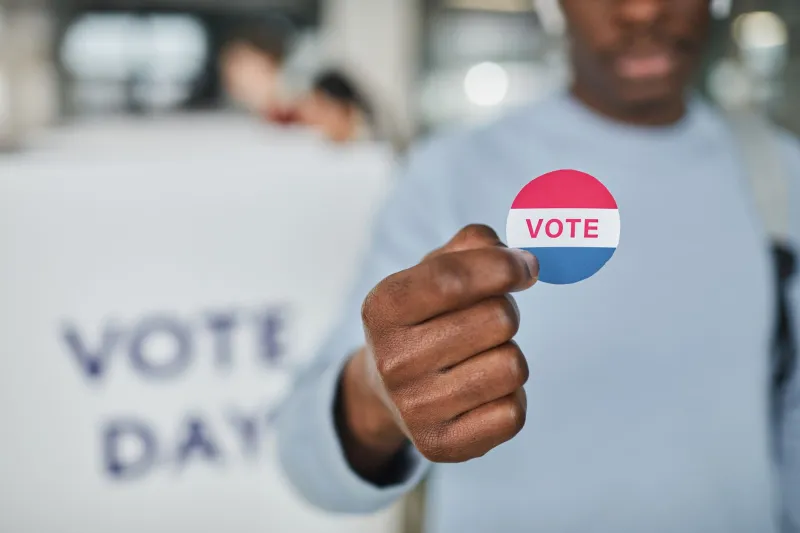
The exit poll has become one of the more reliable producers of political embarrassment. Voters emerge from polling stations and report, with remarkable candor, that the person they just elected is dishonest, unqualified, temperamentally unsuited to office, or some combination of all three. Political analysts treat this as a paradox. Historians recognize it as a pattern.
Americans have been voting for candidates they distrust since before the country had a stable party system. The reasons have varied. The psychological mechanism has not.
Andrew Jackson and the Original Protest Vote
The election of 1828 is often taught as a triumph of frontier democracy — the rise of the common man against the entrenched Eastern establishment. That framing is not wrong, but it is incomplete. Andrew Jackson was not merely a popular hero. He was, by the standards of his era and by the open acknowledgment of many who supported him, a man of violent temper, dubious legal history, and genuinely alarming personal conduct. He had killed a man in a duel over a horse race bet. His marriage was a source of ongoing scandal. His approach to governance was, to put it carefully, improvisational.
None of this disqualified him. Much of it was, in a specific sense, the point. His supporters were not voting for Jackson because they believed he possessed the temperament of a statesman. They were voting against the system that had produced the previous four presidents — all of them from the same narrow social and geographic stratum. Jackson was the instrument of that rejection. His personal defects were, in the minds of many voters, either irrelevant to that purpose or actively confirming of it.
This is the structure of the anti-candidate vote. The voter is not endorsing the person. The voter is deploying the person.
The Rascal We Know
A second and distinct pattern appears throughout American political history: the deliberate re-election of officials whose corruption is already established and, in some cases, already exposed. The career of James Michael Curley — four-term mayor of Boston, governor of Massachusetts, congressman, and federal prisoner — illustrates this phenomenon with unusual clarity. Curley was indicted, convicted, imprisoned, and re-elected, sometimes in that precise sequence. Boston voters were not uninformed about his conduct. They were, in many cases, the direct beneficiaries of it.
What Curley provided was not honest government. He provided visible, tangible, neighborhood-level patronage to constituencies that had been systematically excluded from the benefits of more respectable administration. The corruption was the product. The voters understood the transaction. Their choice to return him to office repeatedly was not irrational. It was a calculation that the known rascal who delivered was preferable to the unknown reformer who might not.
This same calculus has appeared in every region of the country and across every political era. The Louisiana voters who supported Huey Long knew what he was. The Chicago voters who sustained the Daley machine for decades knew what it was. Knowledge of a candidate's character has rarely been the deciding variable in American electoral outcomes. Perceived utility has been.
What Voters Are Actually Deciding
The political science literature on voter decision-making has spent decades attempting to model the factors that determine electoral choice. Party identification, economic conditions, candidate likability, and issue salience all appear in the models. What the models have consistently struggled to capture is the degree to which voters are often making a choice between two forms of risk rather than between a preferred and a rejected option.
When a voter selects a candidate they openly distrust, they are frequently communicating something specific: that the alternative is more threatening than the known deficiencies of the candidate they chose. This is not irrationality. It is a form of risk management operating under conditions where neither option is genuinely acceptable.
Human beings have always made this calculation. The historical record of political decision-making — from the Athenian assembly to the Roman popular assemblies to the colonial legislatures that preceded the American republic — is full of instances in which populations chose flawed, dangerous, or openly dishonest leaders over alternatives they perceived as worse. The specific content of the choice changes. The underlying structure does not.
The Outsider as Instrument
A third pattern, distinct from both the protest vote and the known-rascal vote, is the outsider candidacy — the figure presented as standing entirely apart from the system being rejected. American political history has generated this figure with remarkable regularity. William Henry Harrison was marketed as a log-cabin frontiersman despite being the son of a Virginia planter. Dwight Eisenhower had no political record because he had no political career. Jimmy Carter ran explicitly against Washington from a peanut farm in Georgia.
In each case, the outsider status was partly genuine and partly constructed. More importantly, the voters who supported these candidates were not primarily evaluating their fitness for office in any conventional sense. They were evaluating their distance from the thing being rejected. The outsider's qualifications were, in a sense, irrelevant. Their separateness was the qualification.
This pattern has intensified in recent decades as institutional trust has declined across virtually every category of American public life. When the institution itself is the object of suspicion, the candidate most associated with that institution carries its stigma. The candidate who can most plausibly claim to stand outside it inherits the votes of everyone who has concluded that the institution cannot reform itself from within.
The Consistent Logic Beneath the Changing Names
What the history of American elections reveals, when read through the lens of consistent human psychology rather than through the lens of any particular political moment, is that the vote has rarely been a simple endorsement. It has almost always been a more complicated act — part strategic calculation, part expression of grievance, part signal to institutions that their credibility is being audited.
Voters who choose candidates they distrust are not confused. They are operating from a set of priorities in which character assessment is one variable among many, and not always the most heavily weighted one. The desire to punish an incumbent coalition, to obtain specific material benefits, to register a protest that will be legible to the political class — all of these can and regularly do outweigh a voter's private assessment of a candidate's honesty or fitness.
The exit poll respondent who says she voted for someone she doesn't believe in is not describing a malfunction. She is describing the oldest and most honest account of what democratic choice has always actually involved: the selection of the least unacceptable option available, made under conditions that were never designed to produce a satisfying answer.