Photo: Gordon Hatton , CC BY-SA 2.0, via Wikimedia Commons
Somewhere on the interstate, behind a sign that reads TOLL PLAZA 1 MILE, an American driver reaches for loose change or checks that the transponder is properly mounted. The transaction feels routine — a small price for maintained pavement, for the convenience of not driving through town centers, for the engineering miracle of a grade-separated highway. It feels, above all, modern.
It is not. The toll booth is among the most durable institutions in the history of human movement, and the logic animating it — that the people who build infrastructure deserve to extract revenue from those who use it, indefinitely, regardless of whether construction costs were long ago recovered — has been operating without meaningful interruption since at least the eighth century BCE.
The psychology of paying to move freely has never changed. Only the signage has.
The Roman Road Was Never Free
The Roman cursus publicus is often cited as the ancient world's most impressive transportation network, and in engineering terms, the admiration is warranted. Rome built approximately fifty thousand miles of paved road across its empire, graded for drainage, reinforced with stone, and maintained through a sophisticated system of regional administration. What is less frequently noted is that this system was not a public good in any modern sense of the phrase.
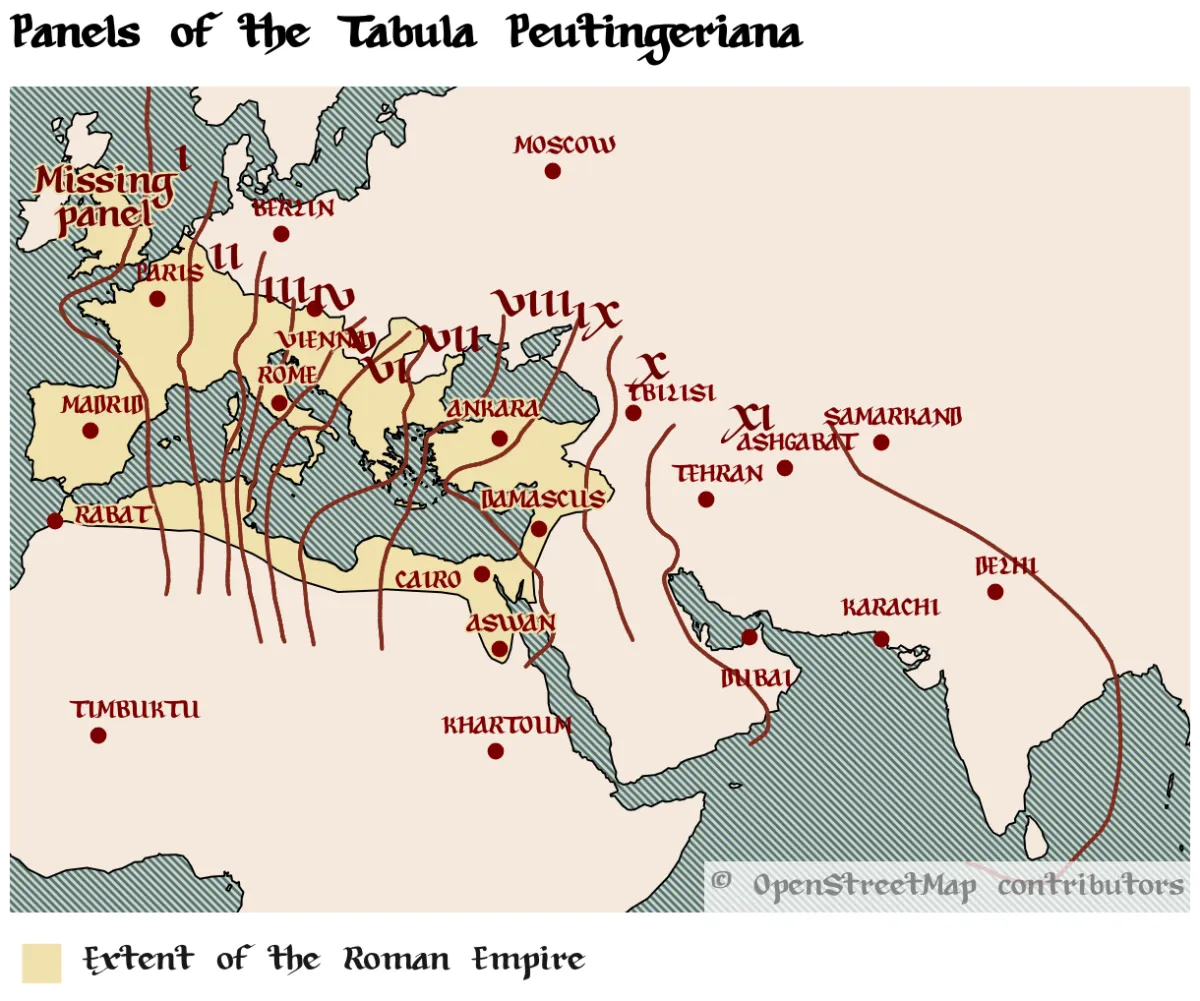 Photo: Roman cursus publicus, via datawrapper.dwcdn.net
Access to the cursus publicus required a diploma — a document issued by imperial authority that permitted travel on the network and entitled the bearer to use way stations, fresh horses, and lodging. Obtaining a diploma required connection, payment, or both. The roads were funded by provincial taxation, meaning the populations of conquered territories paid for their own occupation infrastructure, and then paid again for the privilege of using it. The people who built the roads and the people who controlled access to them were rarely the same people, and the gap between those two groups was, reliably, where the money went.
This arrangement was not unique to Rome. Ancient Persian royal roads operated under similar access controls. Mesopotamian trade routes through the Zagros passes were taxed by whoever held the high ground. In medieval Europe, river crossings became so thoroughly monetized that bridge tolls were a primary revenue source for regional lords who had often contributed nothing to the bridge's construction and performed only the minimum maintenance necessary to keep the revenue flowing.
The Turnpike Trust and the American Inheritance
When English colonists arrived in North America, they brought with them a transportation funding model that had been refined over several centuries of British road law. The turnpike trust — a private entity granted authority to build and maintain a road in exchange for the right to collect tolls — was not a colonial innovation. It was an import.
By the late eighteenth century, turnpike trusts controlled thousands of miles of road across England, and the model had crossed the Atlantic with enough institutional momentum to shape American transportation policy for the next two hundred years. Pennsylvania's Lancaster Turnpike, completed in 1795, is frequently described as the first major paved road in the United States. It was also, from its first day of operation, a toll road financed by private investors who expected a return.
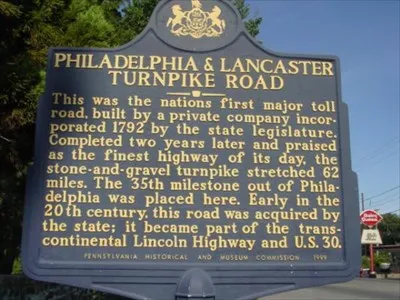 Photo: Pennsylvania's Lancaster Turnpike, via img.geocaching.com
The psychological architecture of the American turnpike was carefully constructed. Toll gates were placed at intervals calculated to maximize collection while minimizing the traveler's sense of being bled. The roads were visibly better than the alternatives — muddy local tracks, rutted county roads — so the toll felt like a fair exchange. What travelers rarely calculated was that the land through which those roads passed had often been acquired through government grant, that the labor had been performed by workers whose wages were set by the same investors collecting the tolls, and that the maintenance obligations specified in the original charters were routinely deferred until they became emergencies that justified toll increases.
This pattern — public subsidy at the input stage, private extraction at the output stage — has characterized American transportation finance from Lancaster to the modern express lane.
The Booth Changes Shape; the Logic Does Not
The twentieth century brought the interstate highway system, federal gasoline taxes, and the widespread assumption that American roads had finally been fully socialized. They had not. The Highway Trust Fund, established in 1956, was a genuine attempt to fund roads through diffuse taxation rather than point-of-use fees. But the fund's long-term structural deficit, combined with the political difficulty of raising fuel taxes, created a predictable vacuum — one that toll authorities, public-private partnerships, and managed lane operators have spent fifty years filling.
Today's American toll infrastructure is substantially more sophisticated than a wooden gate and a man with a ledger, but the underlying transaction is identical. A traveler wishes to move from one place to another. Someone has positioned themselves between the origin and the destination. A fee is extracted. The traveler pays it because the alternative — not moving — is worse.
The modern wrinkle is the managed lane, sometimes called the HOT lane or express toll lane, in which drivers pay a dynamically priced premium to access a less-congested portion of a road they already funded through taxation. The pricing algorithm adjusts in real time to maintain a target speed in the premium lane, which means that as ordinary lanes become more congested — partly because some drivers have been priced out of the fast lane — the toll for the premium lane rises. The congestion that justifies the premium is partly produced by the existence of the premium tier. This is not a design flaw. It is the model working as intended.
Why We Keep Paying
The durability of the toll is not a story about infrastructure finance. It is a story about human psychology in the presence of a bottleneck. Laboratory research on loss aversion — the well-documented tendency to weight losses more heavily than equivalent gains — helps explain why travelers pay tolls they intellectually resent. The alternative to paying is experienced as a loss of time, of reliability, of the trip itself. The toll converts that threatened loss into a manageable fee. We pay not because we believe the fee is fair but because we believe the alternative is worse, and the people controlling the bottleneck have always understood this.
The Roman official issuing travel diplomas understood it. The medieval lord maintaining the minimum viable bridge understood it. The turnpike trust investor understood it. The express lane operator whose algorithm prices the premium lane at nine dollars during a Tuesday afternoon thunderstorm understands it perfectly.
The road was always infrastructure. It was also always a gate. The two functions were never in conflict because the gate was the point.