The Empty Land Was Full of People: How America Sold a Manufactured Wilderness
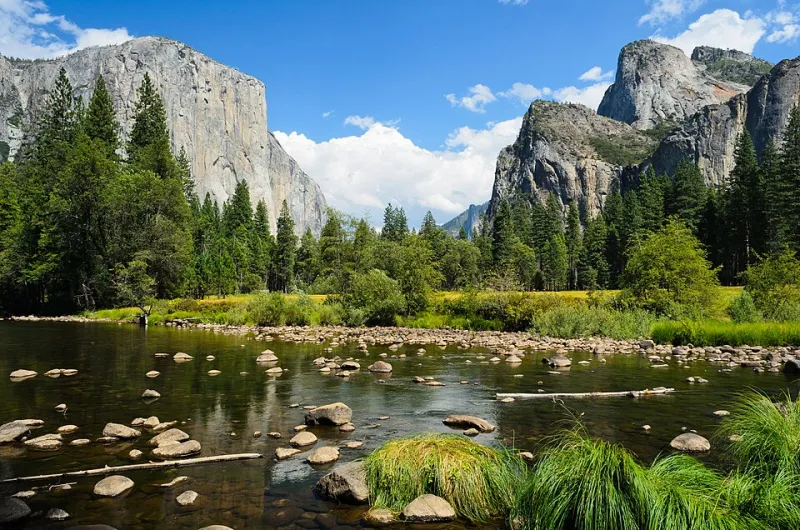
Photo: King of Hearts, CC BY-SA 3.0, via Wikimedia Commons
Every summer, millions of Americans load their vehicles and drive toward emptiness. They are headed for the national parks, the wilderness areas, the great open landscapes of the West — places that exist, in the national imagination, as the opposite of the built world. These are the places where human history has not yet arrived. They are, the story goes, what America looked like before America.
This story is false in almost every particular. The landscapes being visited were not empty before Euro-American settlement. They were not unmanaged. They were not natural in the sense that the word implies — untouched, spontaneous, free from deliberate human shaping. They were, in most cases, the product of thousands of years of sophisticated land management by people who were removed from those landscapes, often by force, in order to create the illusion of primeval emptiness that tourists now pay to experience.
The psychology underneath this is not a uniquely American pathology. The erasure of prior occupants and the subsequent romanticization of their absence follows a pattern that predates Columbus by several empires. What America contributed was the institutional infrastructure to make the erasure permanent and the tourism industry to make it profitable.
What the Forest Was Before It Was a Forest
When European explorers and settlers described the North American interior as a vast and trackless wilderness, they were observing a landscape that had been under continuous human management for at least twelve thousand years. What they interpreted as untouched nature was, in most cases, the result of deliberate, generational land stewardship.
The open parklike forests that early colonists found so navigable and so abundant in game were maintained through systematic burning. Indigenous nations across the continent used controlled fire to clear undergrowth, improve grazing conditions for deer and bison, encourage the growth of specific food plants, and maintain travel corridors. The meadows of the Yosemite Valley — those iconic expanses of open grassland framed by granite cliffs that appear in millions of photographs — were kept open by the Ahwahneechee people through regular burning. The berry fields, the oak woodlands, the grasslands: all of it was tended.
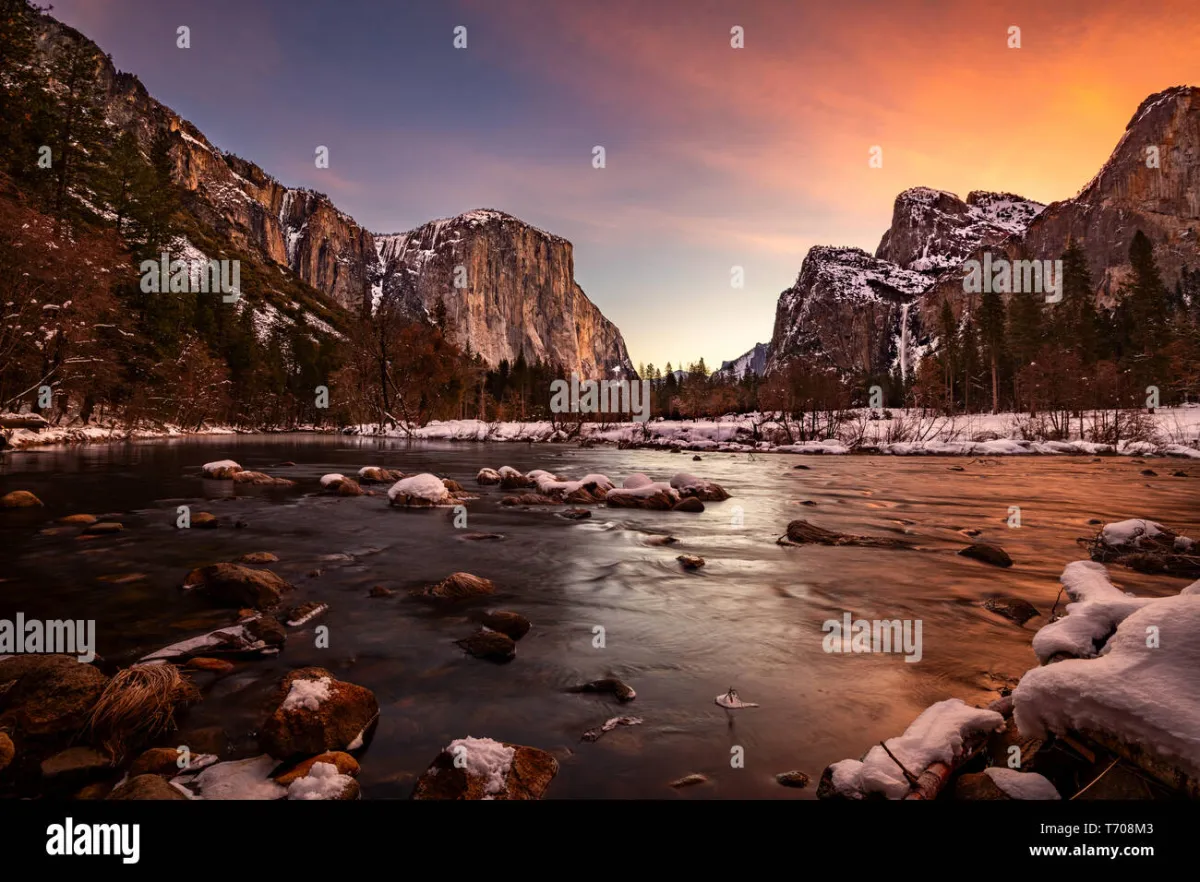 Photo: Yosemite Valley, via c8.alamy.com
When the Ahwahneechee were expelled from Yosemite following the Mariposa War of 1850–1851, the burning stopped. Within decades, the open valley floor began to close in with encroaching conifers. The Park Service has spent considerable resources in recent years conducting prescribed burns to restore the valley's open character — restoring, in other words, the landscape that indigenous management had maintained for centuries and that the act of creating a wilderness preserve had begun to destroy.
This is not an isolated case. It is the rule.
The Romantic Emptiness Had a Brand Strategy
The national park idea did not emerge from a disinterested appreciation of natural beauty. It emerged from a specific cultural moment in the mid-nineteenth century when rapid industrialization, urban growth, and the psychological dislocations of modernity created a market demand for unspoiled nature — and a political constituency willing to fund its preservation.
The painters of the Hudson River School and, later, the photographers who followed the western surveys were not documenting a pre-existing condition. They were constructing an aesthetic. Albert Bierstadt's monumental canvases of the Sierra Nevada and the Rocky Mountains depicted landscapes that were simultaneously real and entirely fabricated — real mountains, real light, but composed to eliminate evidence of human habitation, to maximize the sense of sublime emptiness, to produce in the viewer exactly the emotional response that would generate political support for preservation.
The figures who shaped early American conservation policy, including John Muir, were explicit about what kind of nature they wished to preserve: nature without people. Muir's writing about the Sierra Nevada is lyrical and genuinely felt, but it is also insistent on the absence of human history in a landscape where human history was everywhere. His famous description of first entering Yosemite Valley makes no mention of the people who had lived there. The valley appears in his account as if it had been waiting, empty and perfect, for his arrival.
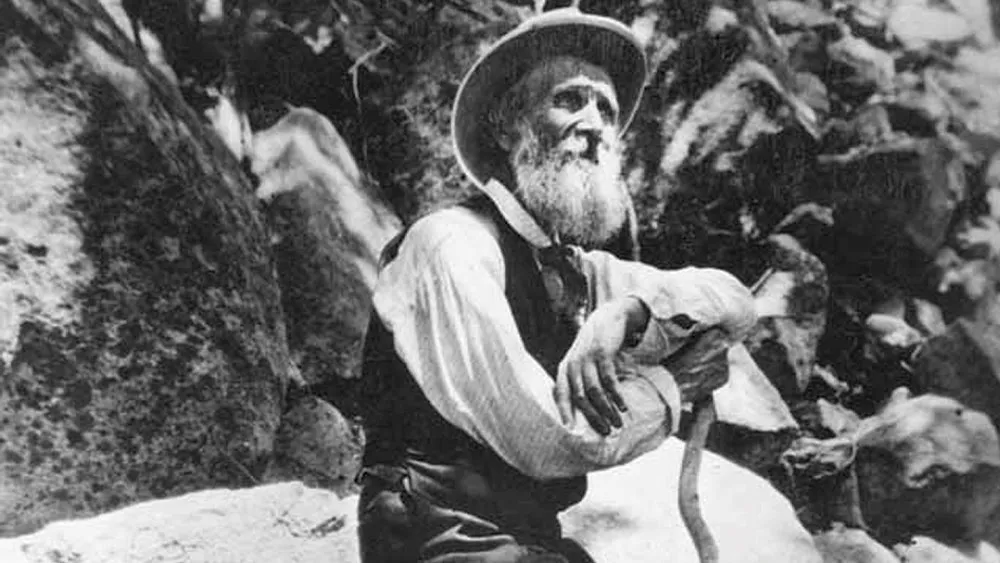 Photo: John Muir, via www.investors.com
This is not a coincidence. It is the template.
Selling the Erasure Back as an Experience
By the time the National Park Service was formally established in 1916, the institutional framework for the American wilderness experience was complete. The land had been cleared of its prior occupants. The management practices that had shaped it had been halted or criminalized. The resulting landscape — now genuinely less managed than it had been for millennia, increasingly overgrown, ecologically destabilized — was declared natural, protected, and open for visitation.
The tourism industry that grew around the national parks sold Americans an experience of pre-human nature. The product being sold was the absence of the very people whose presence had created the landscape being marketed. Lodges were built. Scenic drives were constructed. Ranger programs explained the geology, the wildlife, the ecological processes — and did not, for most of the twentieth century, explain the people.
This pattern has deep historical precedent. The English landscape garden of the eighteenth century — those rolling, seemingly natural estates that appeared to have grown without human intervention — was an engineered aesthetic that required the removal of tenant farmers, the demolition of villages, and the deliberate concealment of the labor that maintained it. The aristocratic visitor was meant to experience nature, not agriculture. The people who made the landscape possible were hidden from the product they had produced.
The American wilderness experience is the democratic version of the English landscape garden. The scale is continental. The erasure is more complete. The marketing budget is larger.
The Landscape Is Still Telling the Story We Told It To
None of this diminishes the genuine value of wild land, of open space, of places where the built environment recedes and something older comes forward. The argument is not that the national parks should be unmade, or that the experience of standing at the rim of the Grand Canyon and feeling small is manufactured and therefore false.
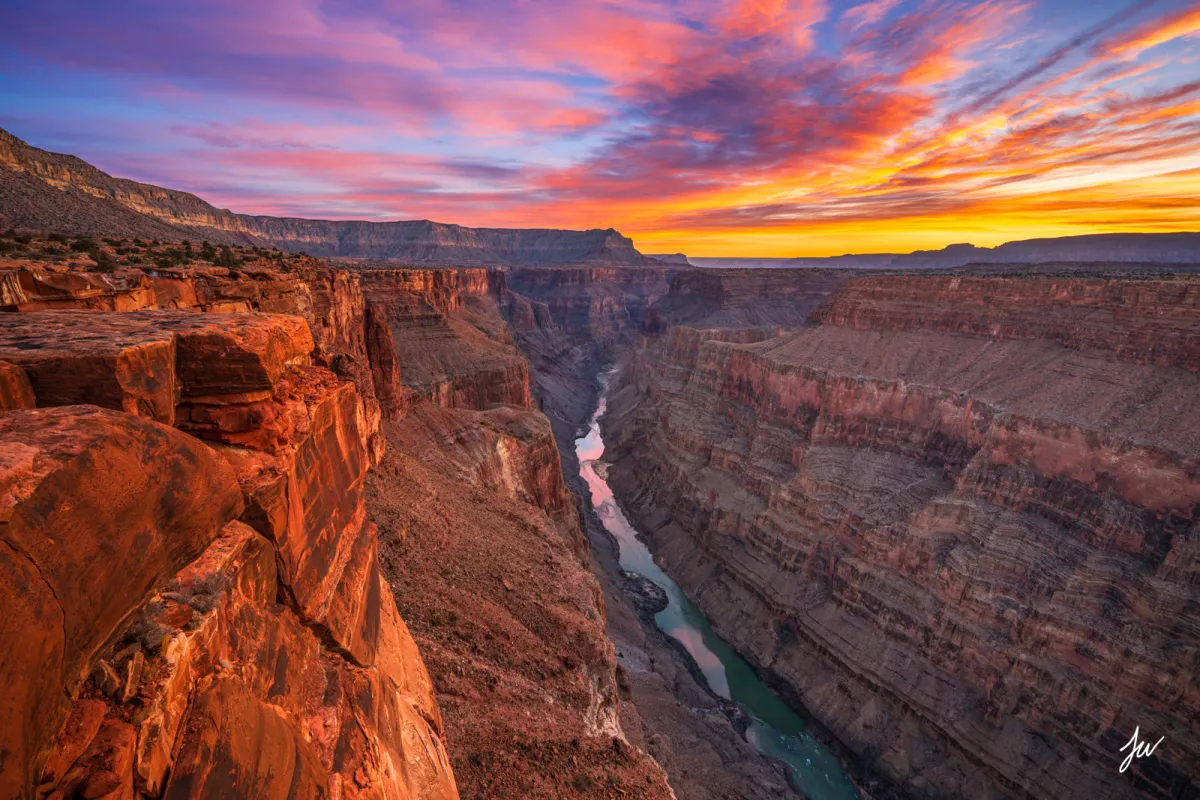 Photo: Grand Canyon, via www.jasonweissphotography.com
The argument is that human beings have an extraordinary capacity to look at a landscape shaped by millennia of human activity and see in it the absence of humanity — and that this capacity has been exploited, repeatedly, by people with an interest in keeping the prior occupants invisible.
The wilderness was always a human construction. The people who built it were removed so that others could experience it as if they had never been there. The visitors who drive those long miles toward emptiness are, without knowing it, completing a transaction that was designed long before they arrived.
The old routes always led somewhere. The question is who was already there when you arrived.