The Remedy Preceded the Diagnosis: Four Thousand Years of Selling You the Problem and the Cure

In the summer of 1893, a man named Clark Stanley stood before a crowd at the World's Columbian Exposition in Chicago and slaughtered a rattlesnake on stage. He rendered its fat into oil, bottled it, and sold it as a cure for rheumatism, neuralgia, sciatica, and — depending on which version of his broadsheet you consulted — a rotating list of additional complaints. Stanley, who billed himself as the Rattlesnake King, is among the most cited examples of American medical fraud. Federal analysis of his product, conducted in 1917, found it contained no snake oil whatsoever, only mineral oil, beef fat, red pepper, and camphor.
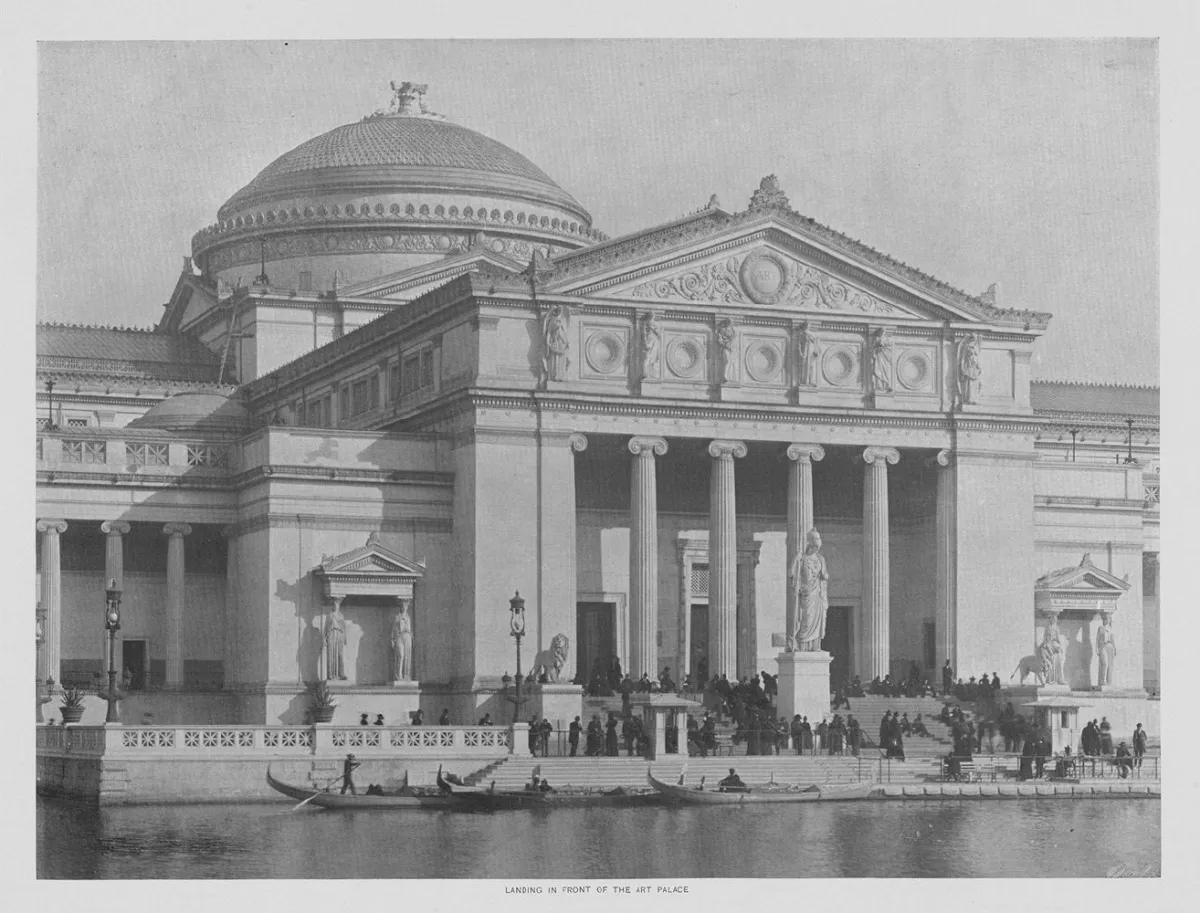 Photo: World's Columbian Exposition, via s3.amazonaws.com
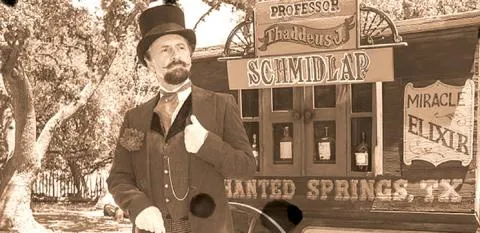 Photo: Clark Stanley, via ancientoriginsmagazine.com
Stanley is remembered as a peculiarly American phenomenon, a product of frontier credulity and weak consumer regulation. This reading is incorrect. Clark Stanley was practicing a profession with a documented history stretching back at least to the New Kingdom of ancient Egypt, and his specific technique — manufacture the anxiety, then immediately offer its resolution — was already old when the pyramids were being planned.
The Egyptian Baseline
The Ebers Papyrus, dated to approximately 1550 BCE and representing medical knowledge that is itself a compilation of earlier sources, contains some seven hundred prescriptions. Many are straightforward treatments for identifiable conditions. But a significant portion follow a different structure: they describe, first, a condition the reader may not have previously considered cause for alarm, and then provide the remedy.
This sequencing is not medically neutral. A document that begins by cataloguing symptoms you might have — fatigue, occasional stomach upset, mild joint discomfort, the vague sense that your vitality is declining — and then offers a course of treatment is not simply practicing medicine. It is creating a market. Egyptian remedy sellers, who operated at temple precincts and in marketplace stalls, understood that the customer who came in knowing exactly what they needed was less valuable than the customer who could be persuaded to discover a need they had not previously identified.
The remedies themselves were secondary. The diagnostic framing was the product.
Greek Physicians and the Art of the Memorable Prognosis
Hippocratic medicine is celebrated for introducing observation and empiricism into ancient healthcare, and that reputation is substantially deserved. What is less often noted is that the Hippocratic corpus also contains extensive guidance on what we might today call patient communication strategy — specifically, on how a physician should present a prognosis in terms that would enhance his professional reputation regardless of outcome.
The advice is remarkably candid. A physician who predicted a patient's decline and was proven correct gained authority. A physician who predicted recovery and achieved it gained loyalty. The recommended approach was to describe the patient's situation in terms that were both alarming enough to underscore the physician's indispensability and calibrated enough to leave room for the physician to claim credit for any improvement. This is not quackery. The Hippocratic writers were genuinely interested in accurate diagnosis. But the rhetorical framework they built around it was explicitly designed to maximize the patient's dependence on the practitioner.
The definition of the problem and the provision of its solution were, even in legitimate ancient medicine, a unified commercial act.
The Patent Medicine Era as Inheritance, Not Innovation
When patent medicines flooded the American market in the decades following the Civil War, they arrived in a country with no federal drug regulation, a rapidly expanding newspaper industry hungry for advertising revenue, and a population that had limited access to formal medical care. These conditions made the United States an unusually receptive environment for the trade. But the trade itself was not new.
The formula was consistent across products and eras. Lydia Pinkham's Vegetable Compound, one of the most commercially successful patent medicines in American history, was marketed primarily to women through advertising that described, in sympathetic and increasingly specific detail, a constellation of symptoms — fatigue, nervous exhaustion, irregular cycles, a general sense of physical depletion — that the compound was positioned to address. The advertising did not simply claim to cure a known disease. It described an experience and invited the reader to recognize herself in it. The diagnosis was the advertisement.
This technique had an ancient name in rhetoric: enargeia, the creation of vivid mental images designed to make the abstract feel immediate and personal. The patent medicine copywriters of the 1880s had almost certainly never read Quintilian. They did not need to. The method was available to anyone who understood that people act on felt needs more readily than on abstract ones, and that felt needs can be constructed.
The Wellness Industry's Unacknowledged Ancestry
The contemporary wellness industry — a sector that market analysts valued at over five trillion dollars globally by the early 2020s — operates on a structure that would be immediately legible to an Egyptian remedy seller or a Gilded Age patent medicine advertiser.
The industry's foundational move is the expansion of the diagnostic category. Conditions that previous generations did not recognize as medical problems — suboptimal gut microbiome composition, mitochondrial inefficiency, hormonal imbalance detectable only through proprietary testing, the presence of unspecified toxins requiring unspecified cleansing — are named, described in language that is clinical enough to sound authoritative and vague enough to apply to nearly anyone, and then immediately paired with a purchasable solution. The supplement, the protocol, the program, and the retreat are not separate from the diagnosis. They are its purpose.
The technology of delivery has changed. The anxiety is now distributed through social media rather than newspaper back pages, and the remedy arrives via subscription box rather than traveling salesman. But the structure of the transaction — here is something wrong with you that you did not previously know about; here is what we sell — has not been revised in any meaningful way since the scribes of the New Kingdom were compiling their first pharmacy catalogues.
What Four Thousand Years of Evidence Suggests
The persistence of this model across cultures, centuries, and regulatory environments is not evidence of a failure of public education or consumer protection, though both of those failures are real. It is evidence of something more fundamental: the human appetite for an explanation of one's discomfort, and the relief — psychological as much as physical — of being handed one.
The most effective remedy has always been the one that arrived with a convincing account of the disease. Not because the remedy worked, necessarily, but because the account of the disease resolved a more pressing problem than the physical complaint: the problem of uncertainty. We will pay, and have always paid, for the comfort of a named affliction. The people who understood this were never quacks in the popular sense. They were, in the most precise historical meaning, practitioners of a very old trade.
Clark Stanley was not an aberration. He was a link in a continuous chain. The chain is still running.