Familiar Ground: The Endless American Compulsion to Rebuild What Was Left Behind
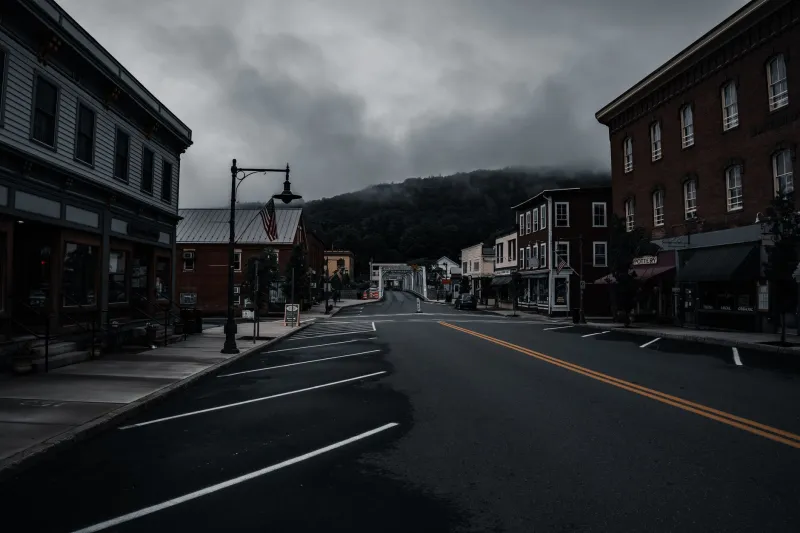
Somewhere in the outer ring of almost every major American metropolitan area, there is a development called something like Millbrook Commons or Heritage Village or The Crossings at Maplewood. It has a walkable main street with retail on the ground floor and residences above. It has a clock tower, or the suggestion of one. It has benches arranged to encourage the kind of spontaneous neighborly conversation that, in the actual neighborhoods it is meant to evoke, has not occurred organically for at least fifty years. It is, in almost every measurable sense, a replica of a place that never quite existed — and it sells extraordinarily well.
This is worth pausing on. Not because it is unusual, but because it is so thoroughly usual that we have stopped noticing what it represents.
The Settlers Who Brought the Map with Them
The compulsion to duplicate the familiar did not begin with New Urbanist developers. It arrived on the first boats.
The Puritan settlers of New England did not name their towns arbitrarily. The distribution of English place names across Connecticut, Massachusetts, and Rhode Island — Boston, Hartford, Exeter, Salisbury, Gloucester — was not merely nostalgic. It was cartographic. The settlers were, in a quite literal sense, overlaying a familiar map onto unfamiliar terrain. The new Boston was not identical to the old one, but it was organized according to the same civic principles: the common, the meetinghouse at the center, the arrangement of settlement around a shared institutional core.
Historians of early American settlement have noted that this replication was partly practical. The settlers knew how to build the communities they had come from. The social technologies — the institutions, the land arrangements, the hierarchies — were proven. To build something genuinely new would have required not only new materials but new social agreements, and the settlers were under enough pressure without adding that particular burden.
But practicality does not fully account for the specificity of the replication. The names mattered. The layout mattered. What was being built was not merely functional shelter but a legible place — a place that could be recognized, that carried within its organization the memory of somewhere else.
The German Belt and the Architecture of Longing
The pattern repeated itself with each successive wave of immigration. The German settlers who established communities across Pennsylvania, Ohio, Indiana, and Wisconsin in the nineteenth century rebuilt with a thoroughness that continues to mark those landscapes today. The church at the center of town. The particular arrangement of farmsteads. The names: New Ulm, Germantown, Berlin, Hamburg.
What is notable about the German immigrant replication is how specifically it encoded class and regional identity from the old country. Settlers from Württemberg tended to cluster with other Württembergers. Bavarians with Bavarians. The new American town was not a generic German town. It was a specific German town, relocated.
This specificity served social purposes. It maintained the networks of trust and mutual obligation that had structured economic life in the home community. It preserved the linguistic and cultural environment that made daily life navigable. And it provided, in the disorienting experience of immigration, a form of psychological continuity — the assurance that one was still, in some meaningful sense, in a recognizable place.
The same dynamic appears in virtually every immigrant community that achieved sufficient density to build its own institutions. Little Italy was not Italy. Chinatown was not China. But both were organized according to principles imported from specific places of origin, and both provided their residents with the cognitive and emotional infrastructure of familiarity in an unfamiliar country.
What the Suburb Was Actually Selling
The postwar American suburb is typically analyzed as a product of economic forces: the GI Bill, the interstate highway system, the mass production of housing. These analyses are accurate as far as they go. But they tend to underweight a psychological dimension that the developers themselves understood quite clearly.
The suburb was, among other things, a replica. It was selling a version of the small-town American childhood that its buyers either remembered or had been told to remember — the safe streets, the known neighbors, the sense of bounded, comprehensible community. The fact that the original was already largely gone by the time the replica was being built did not diminish its appeal. It may have enhanced it. The replica was, in some ways, better than the original: it had the form without the actual constraints, the nostalgia without the history.
William Levitt, whose Levittown developments in New York and Pennsylvania housed tens of thousands of returning veterans and their families, was explicit about what he was offering. His advertising did not sell houses. It sold a particular vision of American community life — one that was, from the beginning, a constructed image rather than a documented reality.
The Digital Village
The replication impulse has followed human beings into their online environments with a fidelity that should, by now, surprise no one.
The early internet was characterized by a genuine utopian ambition to build something without precedent — a community organized around shared interest rather than shared geography, free from the constraints of physical place. What emerged instead was an elaborate series of replicas. Online forums recreated the social dynamics of small towns, complete with local celebrities, public disputes, and the enforcement of community norms. Social media platforms recreated the experience of the neighborhood: the public performance of daily life, the maintenance of reputation, the management of belonging.
The platforms that succeeded were not the ones that offered genuinely new forms of social organization. They were the ones that most effectively replicated the social experience their users already knew — and added the convenience of doing it from a couch.
The Question the Replica Never Answers
What is striking about this unbroken history of duplication is not the persistence of the impulse — that is by now well established — but the consistent gap between what the replica promises and what it delivers.
The New England town was not England. The immigrant neighborhood was not the home village. The suburb was not the small town. The online community is not the neighborhood. Each replica captures the form of its original imperfectly and omits, inevitably, the history that gave the original its texture. The clock tower in the New Urbanist development does not tell the time of a community that has actually lived there for a hundred years. It tells the time of a community that has been designed to look as though it might have.
And yet people keep building them. Keep buying them. Keep logging on.
The human need for a legible place — a place organized according to familiar principles, carrying within its structure the memory of somewhere that felt like home — appears to be more durable than any particular form it takes. We build the replica because we cannot quite imagine the alternative, and because the alternative, even when we glimpse it, does not feel like anywhere we have ever been.
The old routes lead, with remarkable consistency, back to somewhere that looks a great deal like where we started.