One Whisper Was Enough: The Unbroken History of the Rumor That Broke the Market
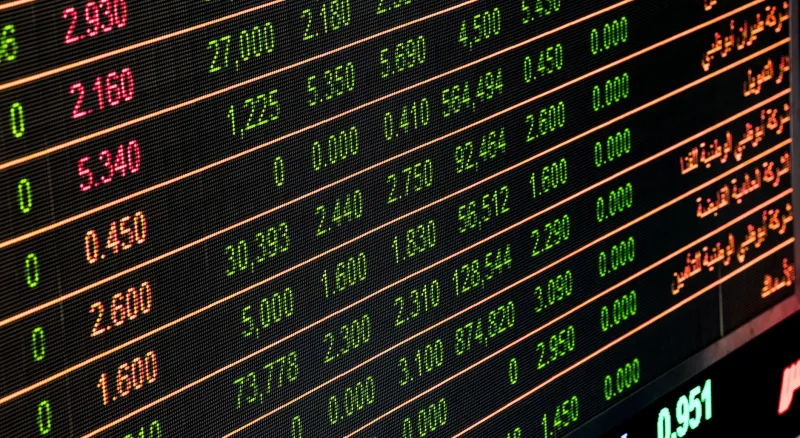
In January 2023, a single post on a financial social media platform — origin unverified, author anonymous, content unconfirmed — suggested that a major regional bank was experiencing liquidity difficulties. Within hours, the claim had been shared thousands of times. Within days, depositors had withdrawn enough funds to make the claim partially self-fulfilling. Within weeks, the bank had failed. Investigators would later note that the underlying institution had real vulnerabilities. They would also note that the rumor had accelerated events by months, possibly by years, and that the person or persons who posted the original claim had taken a significant short position before doing so.
This is a very old story dressed in contemporary technology.
The strategic leak — a piece of information, true or false or somewhere between, introduced into a communication network at a moment calculated to produce maximum price movement — is not a product of algorithmic trading, social media, or the speed of modern information transmission. It is a product of human psychology operating in the presence of uncertainty, and it has been producing identical outcomes for at least four thousand years.
Clay Tablets and the First Information Asymmetry
The archive of ancient Babylonian merchant correspondence recovered from the site of ancient Kanesh in modern Turkey — the Kültepe tablets, dating to roughly 1900 BCE — contains what may be the earliest documented record of commercial intelligence networks. Assyrian merchants operating trading colonies across Anatolia maintained dense correspondence networks, exchanging information about prices, creditworthiness, road conditions, and the reliability of local partners.
These networks were also, necessarily, vulnerability surfaces. A merchant who could insert false information into the correspondence chain — a rumor of tin shortages at the source, a suggestion that a rival trading house was insolvent — could create price movements that benefited his own position before the truth could travel the same distance as the lie. The tablets include examples of merchants warning their correspondents about deliberate misinformation, which means the problem was recognized as a systematic one, not a series of isolated incidents.
The information asymmetry that makes modern insider trading possible and illegal is identical to the asymmetry that made ancient commercial intelligence valuable and dangerous. The person who knows something — or who can make others believe they know something — before the rest of the market has a structural advantage. That advantage has always attracted people willing to manufacture the knowledge if they could not obtain it honestly.
Rome, Grain, and the Weaponized Whisper
The Roman grain market was among the most consequential commodity markets in the ancient world, and it was also among the most vulnerable to rumor. Rome's dependence on imported grain — primarily from Egypt and North Africa — meant that any credible suggestion of supply disruption could produce immediate price spikes in a city of over a million people who needed to eat every day.
Roman sources document repeated instances of what we would today recognize as coordinated market manipulation through information channels. Grain merchants with advance knowledge of a poor harvest, or with the ability to create the impression of one, could warehouse existing stocks and release them at elevated prices once the rumor had done its work. The emperor Claudius, attempting to address chronic grain speculation, established a system of state-backed insurance for grain shippers — an early attempt to reduce the information premium that speculators extracted by controlling access to supply information.
It did not eliminate the problem. It never does. The underlying incentive — that controlling what people believe about supply and demand is as profitable as controlling the supply itself — was not addressed by insurance schemes or price regulations or any of the other instruments that ancient administrators deployed against it. The incentive persisted because the psychology that responded to it persisted.
The Telegraph and the Industrialization of the Leak
The introduction of the telegraph in the mid-nineteenth century is usually described as a revolution in financial information — the moment when markets became truly connected, when prices in New York and Chicago could respond to the same news simultaneously, when the information lag that had made regional arbitrage possible was finally closed.
This description is accurate and also incomplete. The telegraph was also the first infrastructure that allowed a rumor to travel faster than the ability to verify it. Before the telegraph, a false report about a railroad's financial condition might take days to travel from city to city, giving time for counter-information to catch up. The telegraph collapsed that interval to hours or minutes, creating a window in which a well-placed false report could move prices before anyone with contrary knowledge could respond.
The panic of 1873, the most severe economic contraction of the nineteenth century, was preceded by months of telegraph-transmitted rumors about railroad bond valuations, European investment withdrawals, and the solvency of specific financial houses. Some of these rumors were accurate. Some were deliberately fabricated by parties who had positioned themselves to profit from the resulting movements. The historical record does not always distinguish clearly between the two categories, which was, for the people circulating the rumors, precisely the point.
Jay Gould, among the most consequential financial operators of the Gilded Age, understood the telegraph as an instrument of market psychology as much as an instrument of communication. His attempt to corner the gold market in 1869 — the Black Friday panic — depended critically on his ability to control the information reaching other market participants while receiving better information himself. The scheme ultimately failed, but not before it had demonstrated that the communication infrastructure of modern finance was also its primary attack surface.
The Feed Is the New Telegraph
The velocity has increased. The barrier to entry has decreased. The fundamental mechanism has not changed at all.
The anonymous fintech account with forty thousand followers that posts a screenshot of an unverified internal memo is performing the same operation as the Babylonian merchant inserting false supply information into the correspondence chain. The difference is that the modern version can reach its entire audience in seconds, can be amplified by algorithmic recommendation systems that have no interest in accuracy, and can be executed from anywhere by anyone willing to open an account.
Regulatory responses to social-media-driven market manipulation have followed the same pattern as every prior attempt to address the strategic leak: they identify the most egregious recent cases, create rules designed to prevent repetition of those specific cases, and discover that the underlying behavior has adapted to the new regulatory environment while remaining structurally identical.
This is not a failure of regulatory imagination. It is a consequence of trying to regulate behavior that is rooted in psychology rather than technology. The person who profits from moving a market through information — true, false, or strategically incomplete — is responding to an incentive that no communication technology created and no regulatory framework has ever fully extinguished.
The whisper has always been the most powerful instrument in any market. The medium through which it travels is incidental. The human being who hears it, evaluates it, and acts on it before they can verify it — that is the constant. That is the old route. It runs straight from Kanesh to your brokerage app, and it has never been closed.