The Person Who Never Left: On the Permanent Volunteer and the Quiet Capture of Every Institution
There is a person at your local library board meeting who has been there since before the current building was constructed. There is a person at your neighborhood association who drafted the current rules and remembers, with precise detail, the meeting at which each clause was debated. There is a person on your town's planning commission who has outlasted four mayors, two town managers, and a complete turnover of the professional staff. They hold no permanent office. They draw no salary. They are, in every formal sense, a volunteer.
They run everything.
This is not an accident, and it is not a quirk of contemporary American civic life. The permanent volunteer — the person whose institutional power derives entirely from continuity, accumulated knowledge, and the willingness to outlast everyone else — is among the most consistent figures in the history of organized human activity. Understanding how this person accumulates power, what they want with it, and why every reforming movement eventually answers to them requires taking seriously an insight that political scientists have been reluctant to state plainly: in most institutions, formal authority and actual authority are related but distinct phenomena, and the gap between them is occupied by whoever showed up every single time.
The Roman Parallel Nobody Discusses
The Roman Senate, in its mature form, was an institution defined by the distinction between those who held magistracies and those who understood how the Senate actually functioned. Magistracies rotated. The consulship lasted a year. The praetorship lasted a year. The men who accumulated genuine institutional knowledge — who knew which precedents applied, which procedures could be invoked, which alliances had been quietly sustained across decades — were not necessarily the men with the highest current titles. They were the men who had been attending for the longest time.
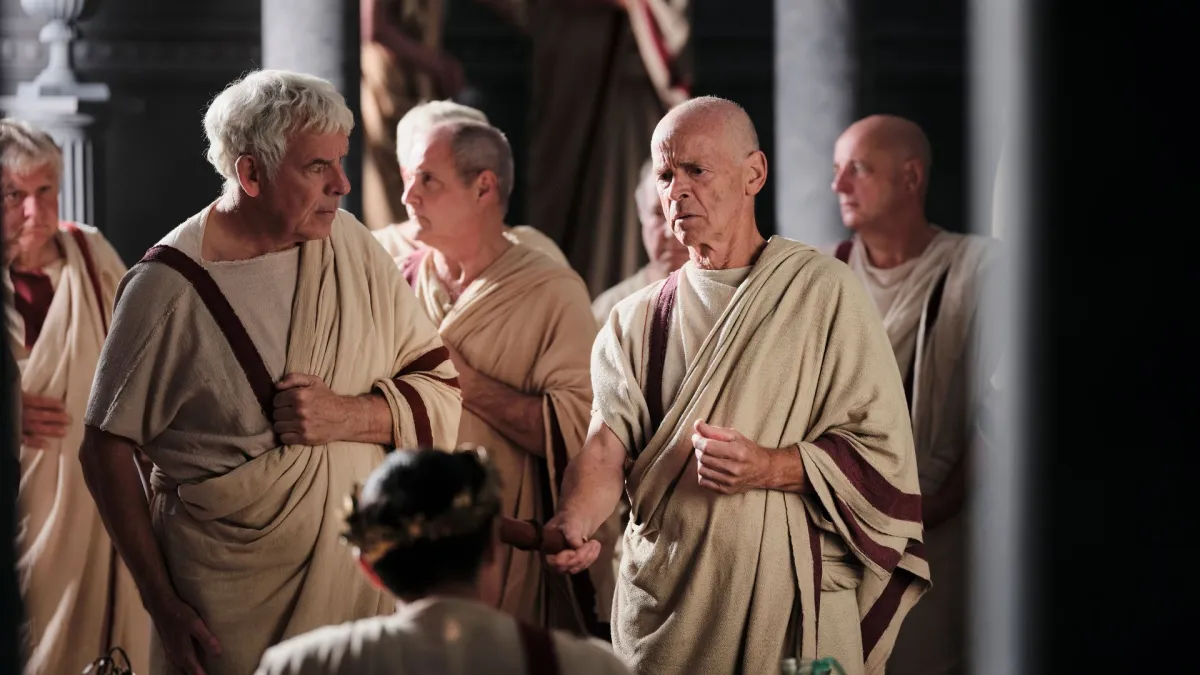 Photo: Roman Senate, via dsk4t6ov5vq8n.cloudfront.net
Cicero's letters are full of references to figures who held no current office but whose opinions on procedural matters were treated as authoritative. Their authority derived not from election but from presence. They had been there. They remembered. In an institution with limited written records and a strong oral tradition of procedural knowledge, the person who remembered was the person who governed.
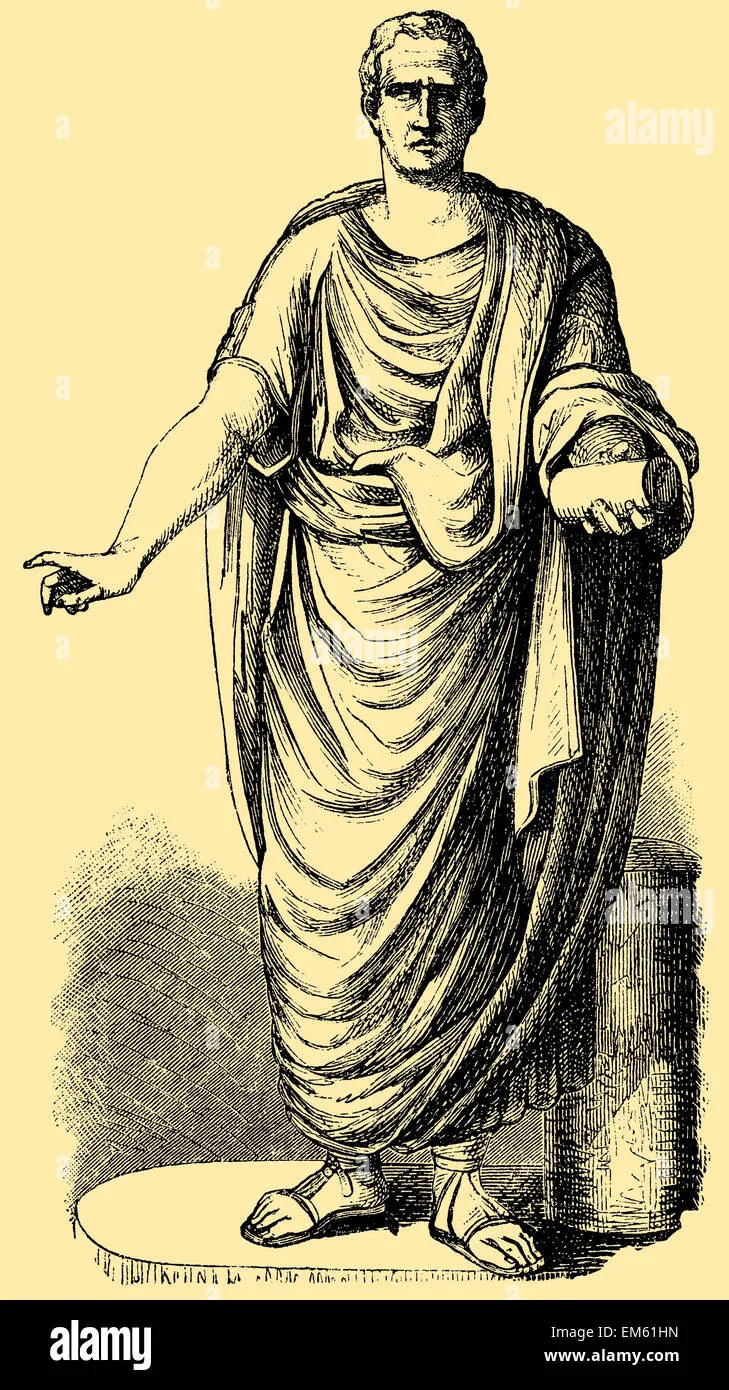 Photo: Cicero, via c8.alamy.com
Medieval guilds replicated this structure so reliably that it appears to have been the default organizational form for any body of people who needed to make collective decisions over time. The elected master of a guild served a term. The permanent officers — the wardens, the clerks, the keepers of records — served until they chose to stop, which in many documented cases meant they served until they died. Reform movements within guilds consistently ran aground on the accumulated procedural knowledge of these permanent figures, who could always identify a bylaw, a precedent, or a prior decision that complicated whatever the reformers were attempting.
What the Permanent Volunteer Actually Wants
It is tempting to narrate the permanent volunteer as a power-hungry figure engaged in conscious institutional capture. This framing is occasionally accurate and usually incomplete. The more common psychology is subtler and, in its own way, more interesting.
The permanent volunteer typically began as a genuine enthusiast. They cared about the library, the neighborhood association, the historical society, the school board advisory committee. They showed up because the institution mattered to them. They kept showing up because they were useful, because being useful felt good, and because — gradually, without any single decisive moment — the institution became part of their identity in a way that made stepping back feel like self-erasure.
The power that accumulates around this person is often experienced by them as responsibility rather than authority. They are not, in their own account, running things. They are simply ensuring continuity, protecting institutional memory, preventing the new people from making the mistakes that were already made in 2003. The fact that this protective function gives them effective veto power over most significant decisions is, from their perspective, an incidental feature of doing the job correctly.
This psychological profile — the devoted servant who becomes the de facto sovereign — appears with striking regularity across institutional types and historical periods. The church secretary who has managed parish finances for thirty years. The guild clerk who knows where the seal is kept. The committee chair who has been chair since before the current membership joined. They are not the same person, but they are the same archetype, and they operate by the same mechanism: irreplaceability, cultivated over time, becomes power.
Why Reform Always Finds Them Waiting
Every generation of institutional reformers discovers the permanent volunteer at approximately the same point in the reform cycle: after the election has been won, after the new leadership has taken office, and after the new leadership has discovered that it cannot actually do anything without the cooperation of the person who knows how things work.
This is the structural advantage that continuity always holds over change. The reformers must learn everything from scratch. The permanent volunteer already knows everything. The reformers are busy with the visible work of institutional transformation. The permanent volunteer is busy with the invisible work of institutional maintenance, which turns out to be the work that actually keeps the institution functioning.
In American civic life, this dynamic plays out with particular clarity in school boards, municipal commissions, and the boards of nonprofit organizations. Contested elections are fought, mandates are claimed, new members arrive with specific agendas. Within eighteen months, a significant proportion of those new members have either aligned themselves with the permanent institutional culture or have discovered that their agenda cannot advance without the cooperation of people whose cooperation is not freely given.
The internet was supposed to change this. Online communities would be different — more democratic, more fluid, resistant to the accumulation of informal authority by long-tenured participants. The evidence suggests otherwise. Every significant online community that has existed long enough has developed its own permanent volunteers: the moderators who have been moderating since the early days, the wiki editors whose revision histories stretch back a decade, the forum members whose post counts and tenure grant them an informal authority that no algorithm was designed to create but that every community generates anyway. The mechanism is the same. The medium is different.
The Committee Chair as Historical Constant
What makes the permanent volunteer worth examining carefully is not that they are corrupt or that their influence is illegitimate. Most of them are neither. What makes them worth examining is that their existence reveals something about how human institutions actually distribute power, as opposed to how they formally describe the distribution of power.
Formal authority is visible, audited, term-limited, and subject to electoral or appointive accountability. Informal authority, accumulated through presence and indispensability, is none of these things. It persists through elections. It survives reorganizations. It outlasts the tenures of people who were nominally in charge of it.
The five-thousand-year record of human organization suggests that this is not a design flaw waiting to be corrected. It is a feature of how groups of people manage collective memory and institutional continuity. Every organization needs someone who remembers. The person who volunteers to do that remembering, and who keeps volunteering long after everyone else has moved on, will always end up holding something that looks very much like power.
The old routes were built by committees. The committees were run by the person who came to every meeting. They are still running them. They will be there next Tuesday at seven o'clock. Will you?