The Origin Story Was Written Last: How American Towns Manufactured Their Own Pasts
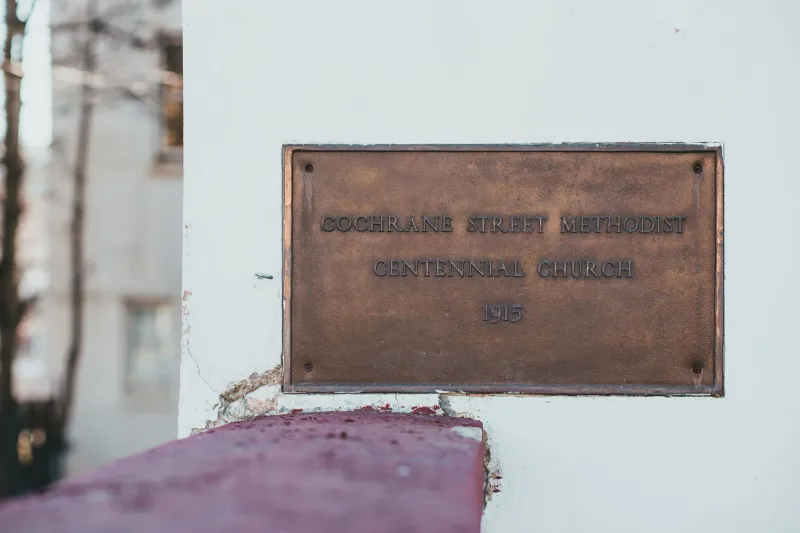
Somewhere in the American West, there is a bronze plaque on a building that claims to be the oldest continuously operating establishment of its kind in the state. The claim is almost certainly false. The building was reconstructed after a fire. The business changed hands, names, and purposes at least twice. The founding date engraved in the metal was chosen not because it is accurate but because it predates the nearest competitor's founding date by a comfortable margin. Nobody who installed the plaque was lying, exactly. They were doing something more interesting: they were writing history as a competitive strategy.
This is not a recent innovation. It is not even an American one. It is among the oldest documented forms of civic communication, and understanding it requires taking seriously the idea that origin stories have never been primarily about origins.
What the Ancient World Called It
In the classical Mediterranean, the practice had a name — or rather, it had a genre. Cities commissioned mythographers to construct genealogies connecting their founding to gods, heroes, or the Trojan War, whichever provided the most useful political associations. Founding myths were not incidental to civic identity; they were deliberate instruments of foreign policy, territorial claims, and economic positioning.
Halicarnassus claimed descent from the same heroic stock as its more powerful neighbors, not because the genealogy was accurate but because the genealogy was persuasive to audiences whose cooperation the city required. Rome's origin story evolved repeatedly over centuries, each revision calibrated to the political needs of the moment. When it became useful to claim descent from Aeneas and thus from the Trojan line, Roman historians found the documentation. The documentation had not previously existed.
The mechanism is not cynicism. It is something more structurally human: communities construct the past that justifies the future they are trying to build. The story comes second. The need for the story comes first.
The Hired Historian and the Convenient Artifact
Nineteenth-century American town-building operated at a pace that compressed this process from centuries into decades. A settlement incorporated in 1854 might commission its official history in 1880, when the original founders were still alive to be interviewed and, more importantly, when the town needed to attract the next wave of settlers, convince a railroad to route through its depot, or secure a state institution that three other counties were also pursuing.
These commissioned histories are extraordinary documents. They are not falsified in the crude sense — the dates are usually correct, the names generally accurate. But the selection of which events to emphasize, which founders to memorialize, and which competing claims to quietly omit reflects an editorial hand that was always pointing toward a specific future audience.
The artifact discoveries followed a reliable schedule. A town competing for county seat designation might find, at a strategically opportune moment, evidence of prior settlement that predated a rival's claim. A community promoting its tourism potential would discover that a famous figure — a general, a president, a suffragist — had once passed through and found the place remarkable. The famous figure had usually passed through briefly and unremarkably, but the local record of the visit had been preserved with unusual care.
This is not to accuse specific communities of fraud. It is to observe that the human impulse to curate the past in service of present ambition is so consistent across cultures and centuries that treating it as a character flaw misses the point. It is a character trait. It is, in fact, the trait that makes civic identity possible.
Plymouth Rock and the Retrospective Nation
The most famous American founding myth illustrates the pattern with unusual clarity. Plymouth Rock, as a sacred object of national memory, did not exist in its current cultural form until 1741, more than a century after the Mayflower landing it supposedly commemorates. The rock was identified, named, and elevated to symbolic significance at a moment when New England communities were engaged in active debates about colonial identity, land rights, and the relationship between the original settlements and subsequent arrivals.
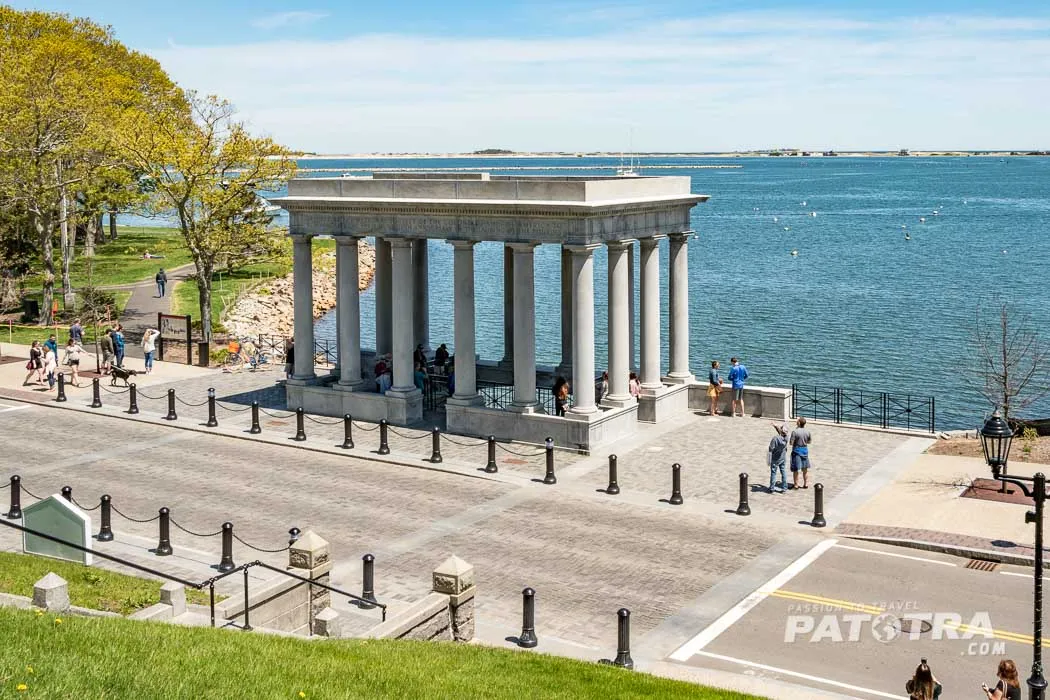 Photo: Plymouth Rock, via www.patotra.com
The story needed the rock. The rock was found.
The Fourth of July itself was not immediately recognized as the correct date to celebrate American independence — the Continental Congress voted on July 2nd, and John Adams famously predicted that date would be the one commemorated. July 4th became canonical gradually, through a process of popular selection that had as much to do with subsequent political associations as with historical precision. The founding myth settled into its current form only after the nation had decided what it needed the founding to mean.
American towns simply replicated this dynamic at local scale, with less time and more urgency.
The Prospectus Disguised as a Monument
The physical infrastructure of civic mythology — the statues, the plaques, the named streets, the preserved buildings — functions as a form of advertising that its creators rarely acknowledged as such. When a county seat in Kansas erected a monument to its pioneer founders in 1895, the audience for that monument was not primarily the descendants of those founders. It was the land agents, the investors, the potential settlers, and the state legislators who would read about the monument in promotional literature and understand that this was a community with deep roots, stable institutions, and a future worth betting on.
The mythology signaled permanence. Permanence attracted capital. Capital built the things that eventually became genuinely old.
This is the self-fulfilling architecture of civic origin stories: told convincingly enough, for long enough, they generate the very substance they initially only claimed. The town that invented a distinguished past in 1880 may have a genuinely distinguished present by 1930, by which point the original invention has been buried under layers of subsequent reality and no longer requires examination.
What the Old Routes Actually Record
Traveling through the American interior today, one encounters the residue of this process in nearly every county seat. The historical markers are not wrong, precisely. They are curated. The dates are real; the framing is strategic. The founding fathers memorialized on courthouse squares were selected not only for their historical prominence but for their narrative utility — they were the people whose stories best supported the identity the community had decided to project.
The practice continues. Economic development offices publish histories of their regions that emphasize industrial heritage when competing for manufacturing investment and natural beauty when competing for tourism. The same county can have two completely accurate and utterly incompatible origin stories depending on who is funding the brochure.
History has always been written by people with somewhere to be. The towns that understood this earliest built the most durable monuments to their own invention. The old routes are real. The stories about who first walked them were always written by whoever arrived second.