Every Gate Was a Treasury: The Ancient Logic Behind Charging You to Move
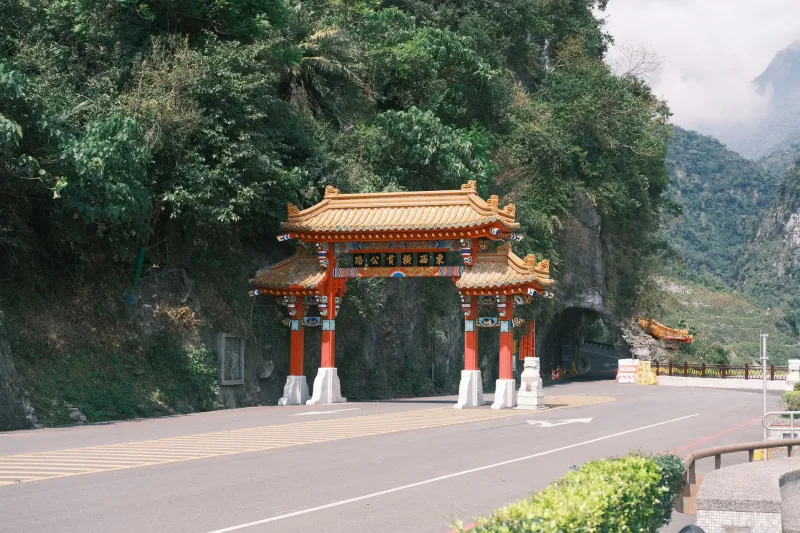
Somewhere in the Zagros Mountains, roughly four thousand years ago, an Assyrian merchant caravan came to a stop at a narrow pass. The men blocking the path were not bandits — or rather, they were not only bandits. They represented a local authority of some kind, and they had a very simple proposition: pay a fee and continue moving, or don't pay and don't continue. The merchant paid. The caravan moved. The authority collected.
The transaction was so unremarkable that it was recorded on a clay tablet as routine business correspondence. What was new enough to write down was not the toll itself but the rate — apparently it had been raised.
This is where the American highway privatization debate actually begins, though you would never know it from listening to the debate.
The Road Was Always the Pretext
Historians of infrastructure tend to celebrate ancient road-building as evidence of civic ambition. The Roman road network, the Persian Royal Road, the Han Dynasty's imperial highways — these are presented as monuments to the idea that connectivity serves everyone. And in a narrow sense, they did. Goods moved faster. Armies arrived sooner. Messages traveled farther.
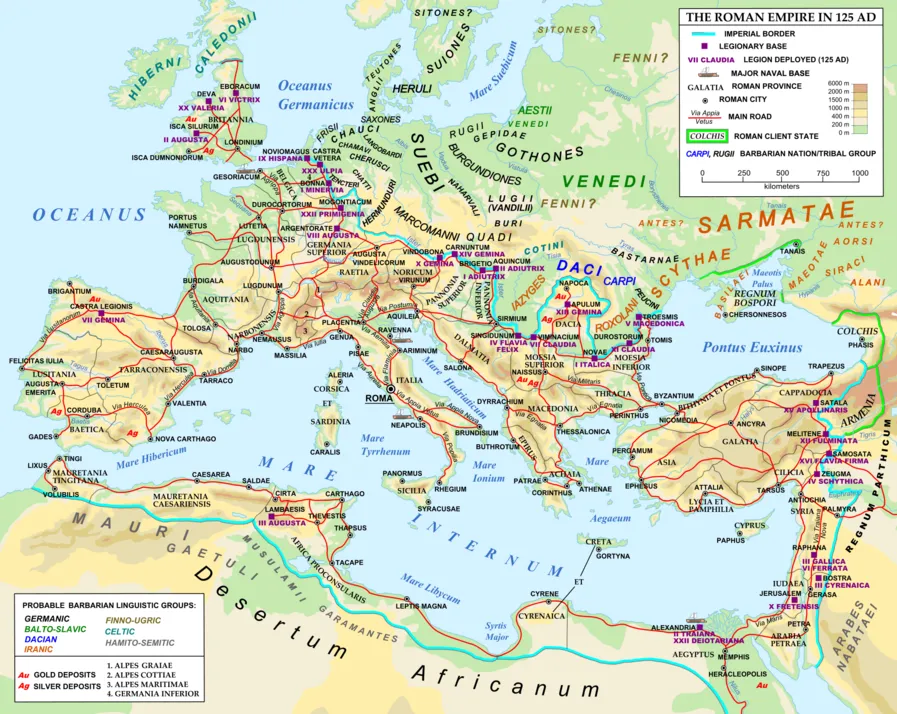 Photo: Roman road network, via brewminate.com
But roads cost money to build and money to maintain, and the people who paid for them were not doing so out of civic sentiment. They were doing so because roads created something more valuable than transportation: they created chokepoints. A mountain pass improved into a reliable road is not just easier to traverse. It is easier to monitor, easier to close, and easier to tax. The investment in infrastructure was simultaneously an investment in the power to interrupt infrastructure.
The Ptolemaic rulers of Egypt understood this with particular clarity. Their road and canal system was not administered as a public service but as a revenue apparatus. Customs stations appeared at intervals calculated to catch traffic, not to assist it. Papyrus records from the second century BCE document toll collectors who were paid partly on commission — an arrangement that should sound familiar to anyone who has read about modern private highway operators whose contracts guarantee minimum traffic revenue from state governments.
The mechanism has not changed. Only the paperwork has.
Medieval Europe's Accidental Proof of Concept
When Roman central authority collapsed in Western Europe, so did centralized road maintenance. What replaced it was, from a transportation standpoint, a disaster. What replaced it from a toll-collection standpoint was a golden age.
Local lords discovered that a ruined bridge was more profitable than a functioning one, provided you also operated the ferry. A flooded ford was excellent for business if you owned the only dry crossing for twenty miles. The fragmentation of political authority in medieval Europe did not eliminate the taxation of movement. It multiplied the number of people entitled to collect it.
By the thirteenth century, Rhine River merchants traveling from the Swiss Alps to the North Sea paid tolls at more than sixty separate stations. Historians have calculated that toll costs alone could account for the majority of a cargo's final price by the time it reached market. The roads and waterways of medieval Europe were, in economic terms, less a transportation network than a distributed revenue-extraction system through which goods occasionally arrived at their destination.
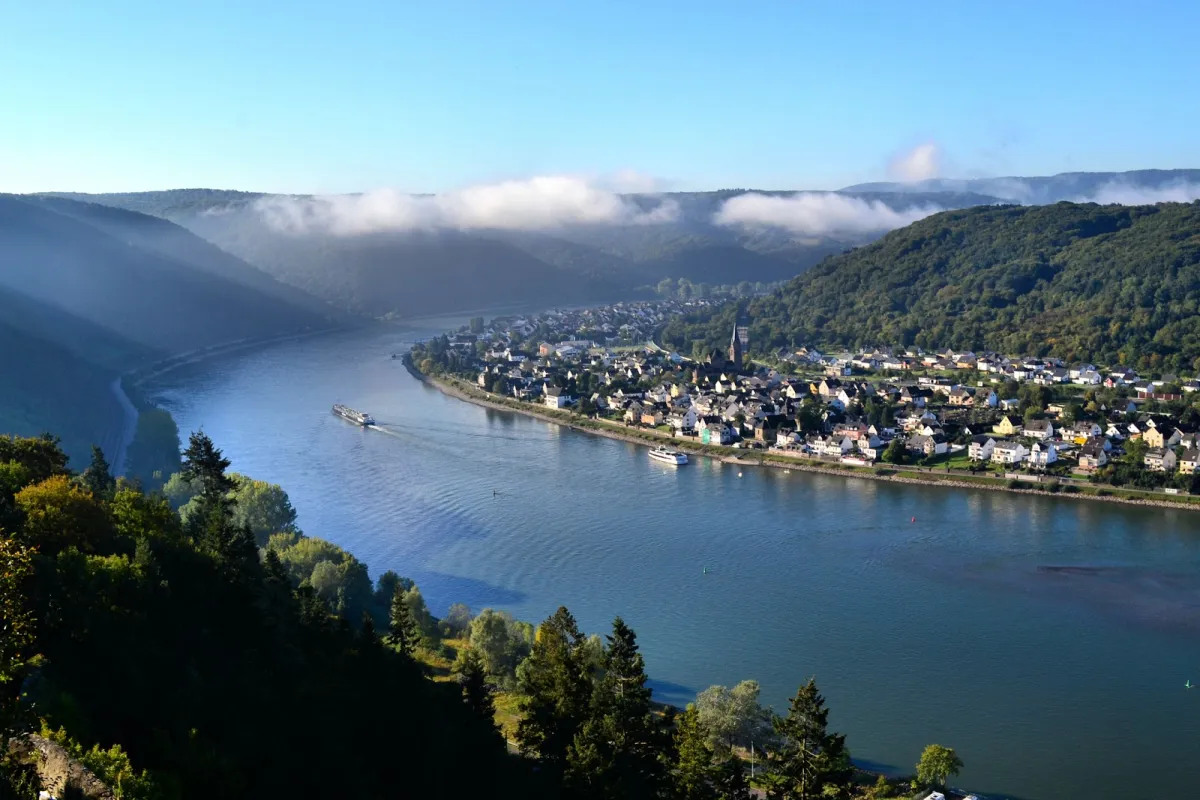 Photo: Rhine River, via 4.bp.blogspot.com
The merchants complained constantly. Emperors periodically issued edicts rationalizing the system. Nothing changed, because the people empowered to reform the tolls were precisely the people collecting them.
The American Turnpike and the Familiar Promise
The United States began its road-building career by outsourcing it. The early American turnpike era, from roughly 1790 to the 1840s, was built on a straightforward premise: private companies would construct and maintain roads in exchange for the right to collect tolls from users. The public got infrastructure without immediate tax expenditure. The investors got a revenue stream.
The results were instructive. Turnpike companies built roads where traffic already existed — where the toll revenue was guaranteed — and avoided routes that would have served dispersed rural communities but offered thinner profit margins. The network that emerged reflected investment logic, not transportation logic. Communities without existing commercial traffic found themselves without roads regardless of their need.
When the railroads arrived and destroyed the economic case for long-distance turnpike travel, most of the companies simply abandoned their roads rather than maintain them at a loss. The public, which had been told it was getting infrastructure without cost, discovered that it had actually deferred the cost while surrendering the control. The roads reverted to local governments in states of considerable disrepair.
This cycle — private investment, selective coverage, profit extraction, eventual abandonment — has repeated itself with sufficient regularity in American history that it qualifies less as a cautionary tale than as a pattern.
The Interstate Era and Its Discontents
The Interstate Highway System, launched in 1956, represented an explicit rejection of the turnpike model. Eisenhower's vision — influenced heavily by his experience watching the German Autobahn and his memory of a grueling military convoy across the United States in 1919 — was of a road network funded by public taxation and free at the point of use. The gas tax would pay for the roads. The roads would serve everyone.
For several decades, this model held. Then the roads aged, the gas tax revenue stagnated as fuel efficiency improved, and the political will to raise taxes weakened. State governments found themselves with infrastructure obligations they could not afford and an asset — the right to collect tolls on high-traffic corridors — that private investors found very attractive.
The privatization deals that followed, from the Chicago Skyway lease in 2005 to the Indiana Toll Road transaction in 2006, transferred operational control of public roads to private entities in exchange for large upfront payments. The immediate fiscal relief was real. The long-term implications were familiar to anyone who had read about Ptolemaic Egypt or the Rhine River barons: the right to tax movement had been sold, and the sellers would not be the ones paying the tolls.
What the Merchant at the Mountain Pass Knew
The Assyrian merchant who paid the pass toll four thousand years ago was not naive about what was happening. His records show careful accounting of transit fees as a cost of doing business, passed along in the final price of whatever he was carrying. The toll was not absorbed by the merchant. It was distributed across every transaction the merchant enabled.
This is the durable insight that every toll system in history has relied upon: the person who pays the toll is rarely the person who bears the cost. The fee moves through the supply chain and arrives, distributed and invisible, in the prices that ordinary people pay for ordinary goods. The gate-keeper collects in one place; the collection is felt everywhere.
When American cities debate highway privatization today, the argument is usually framed as a question about fiscal efficiency — can private operators manage roads more cost-effectively than public agencies? It is a reasonable question. But it is not the question that four thousand years of toll history suggests we should be asking.
The more durable question is simpler: who should have the power to decide when movement is taxed, at what rate, and for whose benefit? That question was old when Rome was young. It has never been answered to everyone's satisfaction, because the people positioned to answer it have always had a financial interest in a particular answer.
The gate is still there. The caravan is still waiting. The rate, as always, has been raised.